Stories
Punk’s not dead
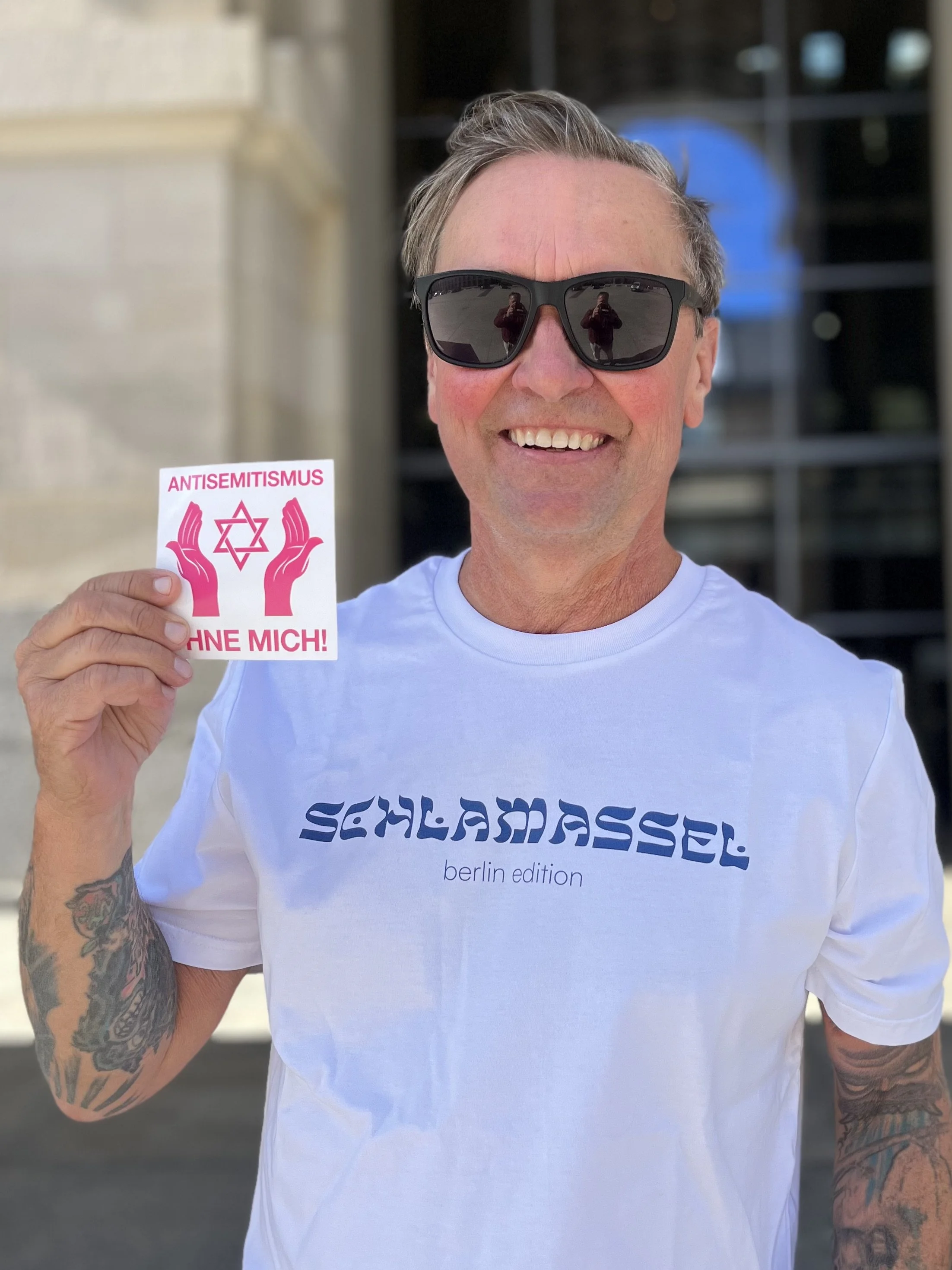
SCHLAMASSEL berlin edition
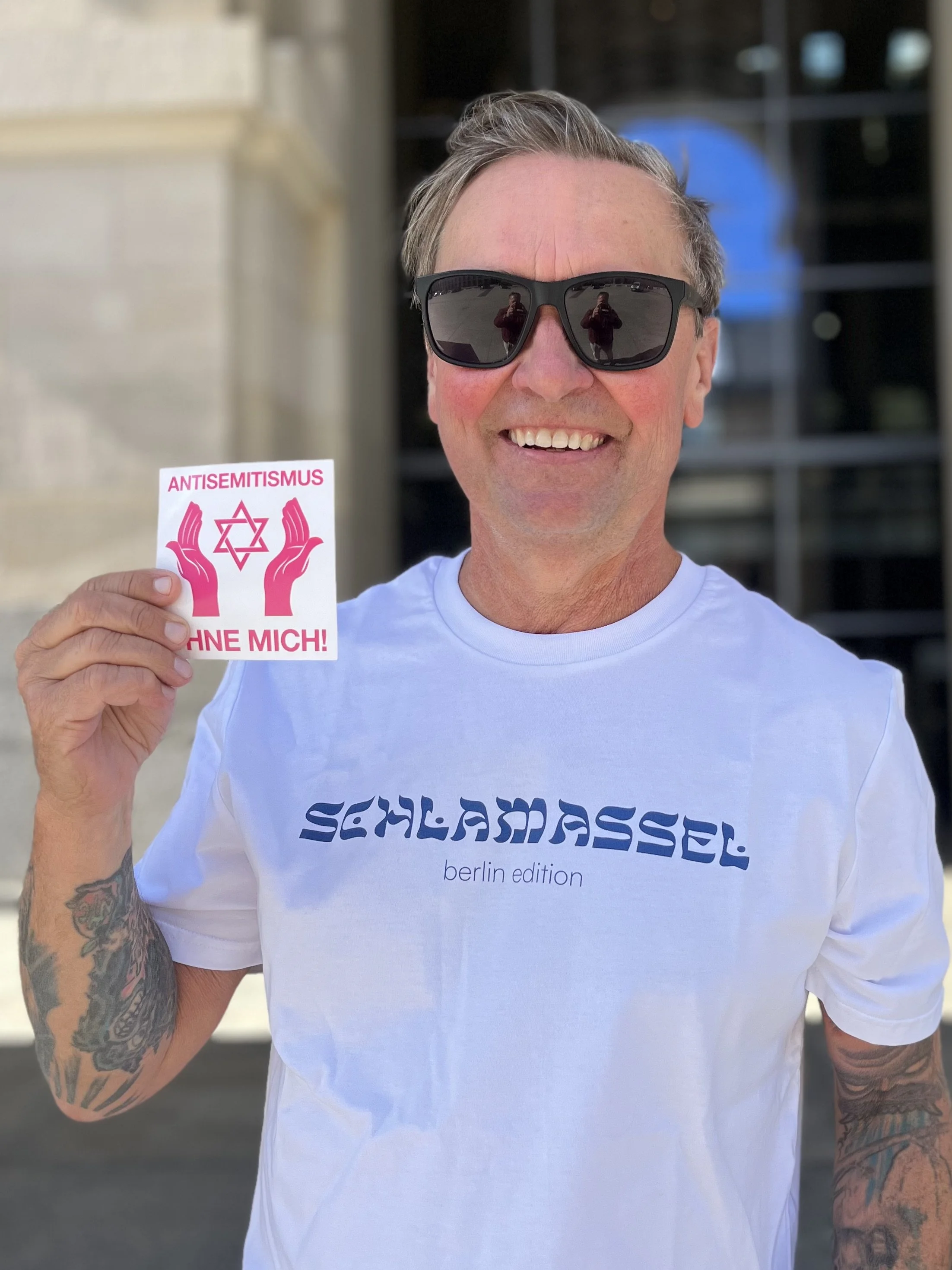
Dr. Michael „Moses“ Arndt, Hausarzt und Bundestagsabgeordneter der Linken, stellt sich deutlich gegen Antisemitismus und gegen die Dämonisierung Israels – auch dort, wo diese Haltung unbequem ist.
Das gefällt uns. Beim passenden Outfit helfen wir natürlich gern.
Denn gegen Antisemitismus einzustehen, sollte gerade in Berlin eigentlich keine Frage des politischen Lagers sein – bei allen politischen Differenzen, die wir in anderen Fragen haben mögen.
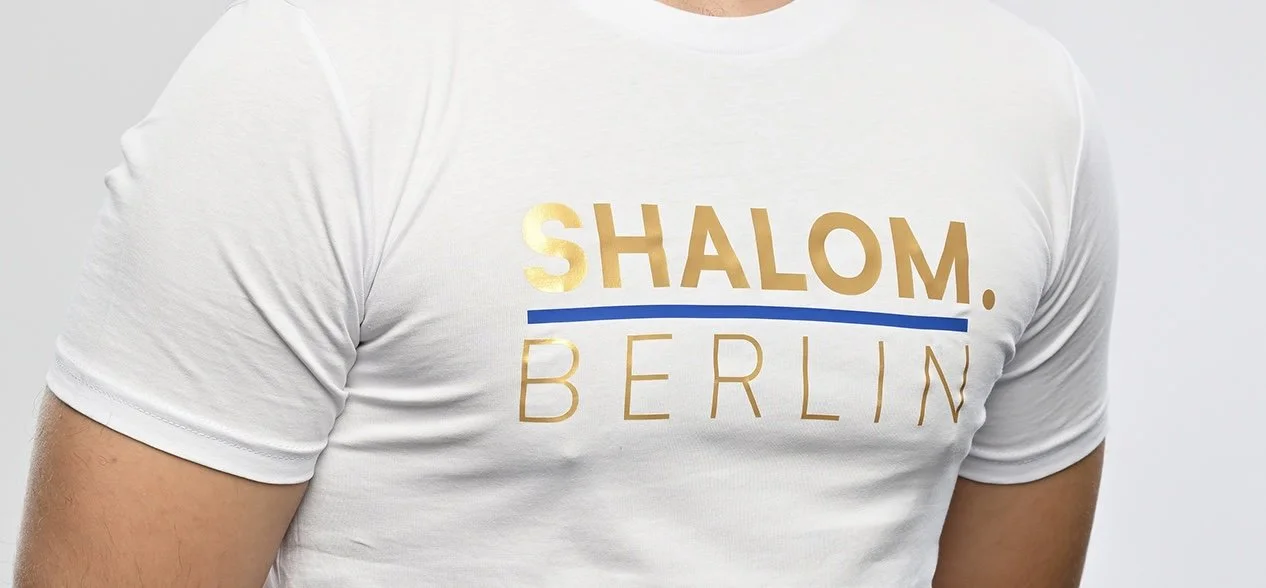
Unsere kleine love Brand SHALOM.BERLIN hat dieses Treffen möglich gemacht.
Den passenden Aufkleber von Verena Kayser-Eichberg und Guy Katz gab’s natürlich auch:
ANTISEMITISMUS OHNE MICH.
Danke, lieber Moses!

Dr. Michael (Moses) Arndt im Interview mit dem nd, 08.04.2026
Man musste als Feindbild erkennbar sein: Ein Gespräch mit Moses Arndt über 50 Jahre Punk
Dr. Michael (Moses) Arndt im Interview mit der jungle world, 02.04.2026
»Wir müssen der Dämonisierung Israels Einhalt gebieten«
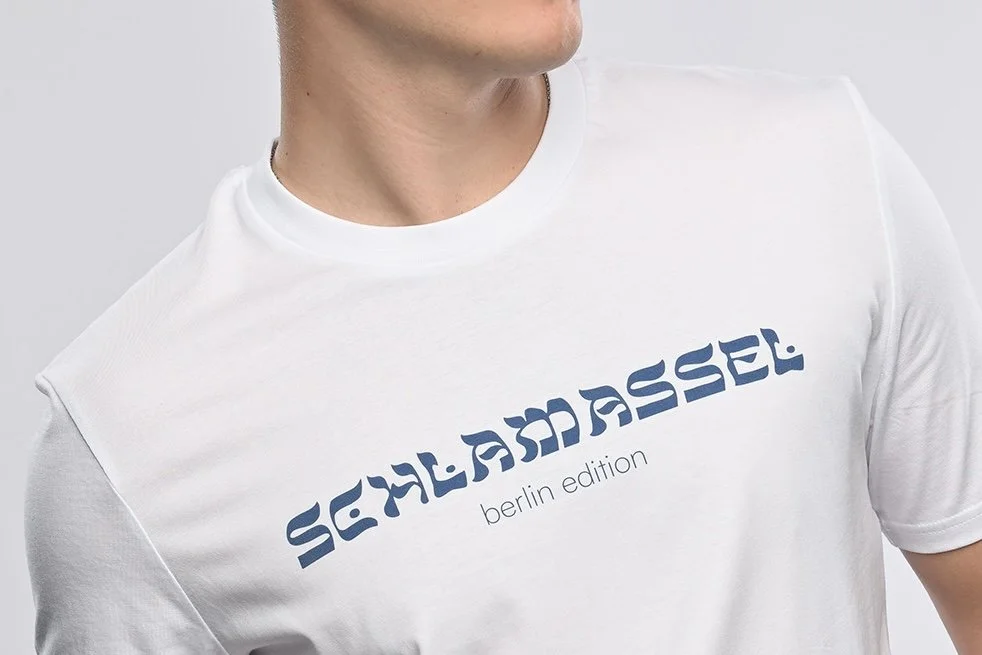
Some call it chaos. Others call it SCHLAMASSEL – Berlin edition.
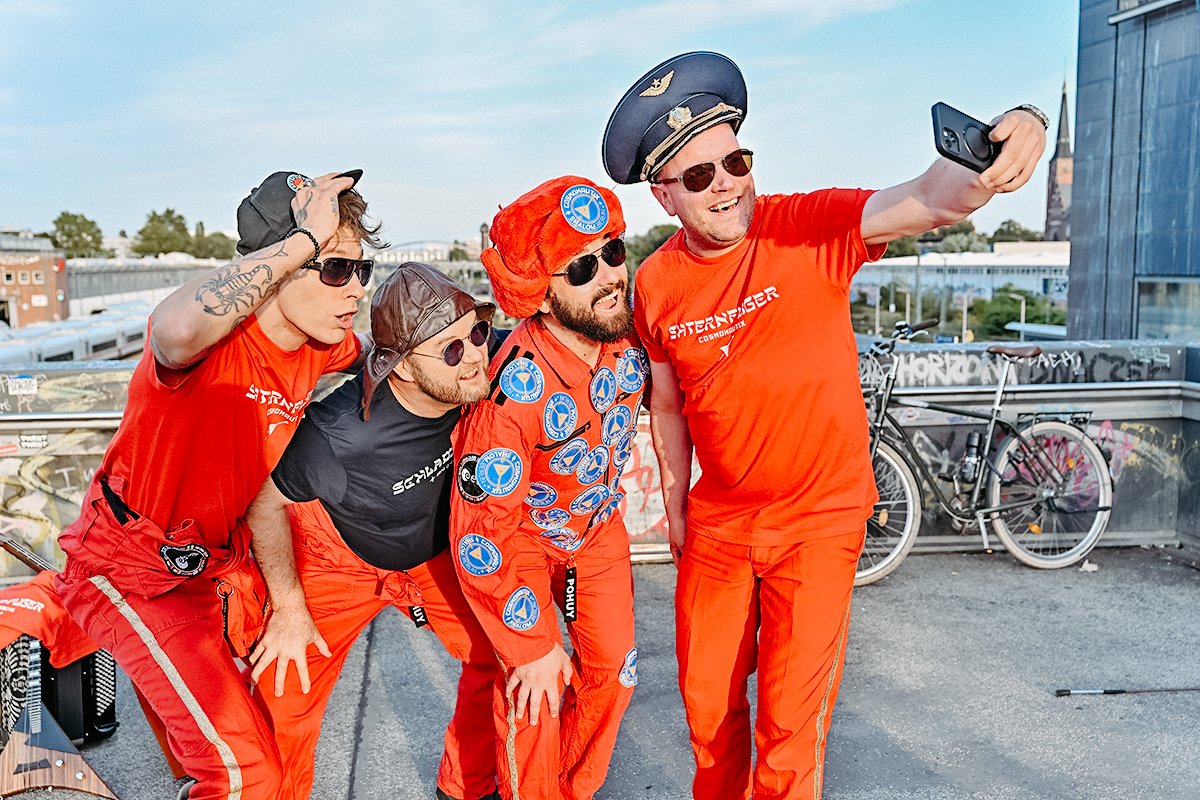
SHALOM.BERLIN x COSMONAUTIX
Rocket Balalaika Speedfolk-Shirts from Space
Zwei Berliner Marken versorgen ab sofort den Kosmos mit guten Shirts:
Unter dem Namen SHTERNFLIGER starten die Berliner Kultband COSMONAUTIX und das Berliner Streetwear-Label SHALOM.BERLIN ihre erste gemeinsame Mission.
Herausgekommen ist keine klassische Merchandise-Kollektion, sondern eine Edition für Menschen, die sich zwischen Balalaika, Speedfolk, Klezmer, Punk und Berliner Schwerelosigkeit wohl fühlen.
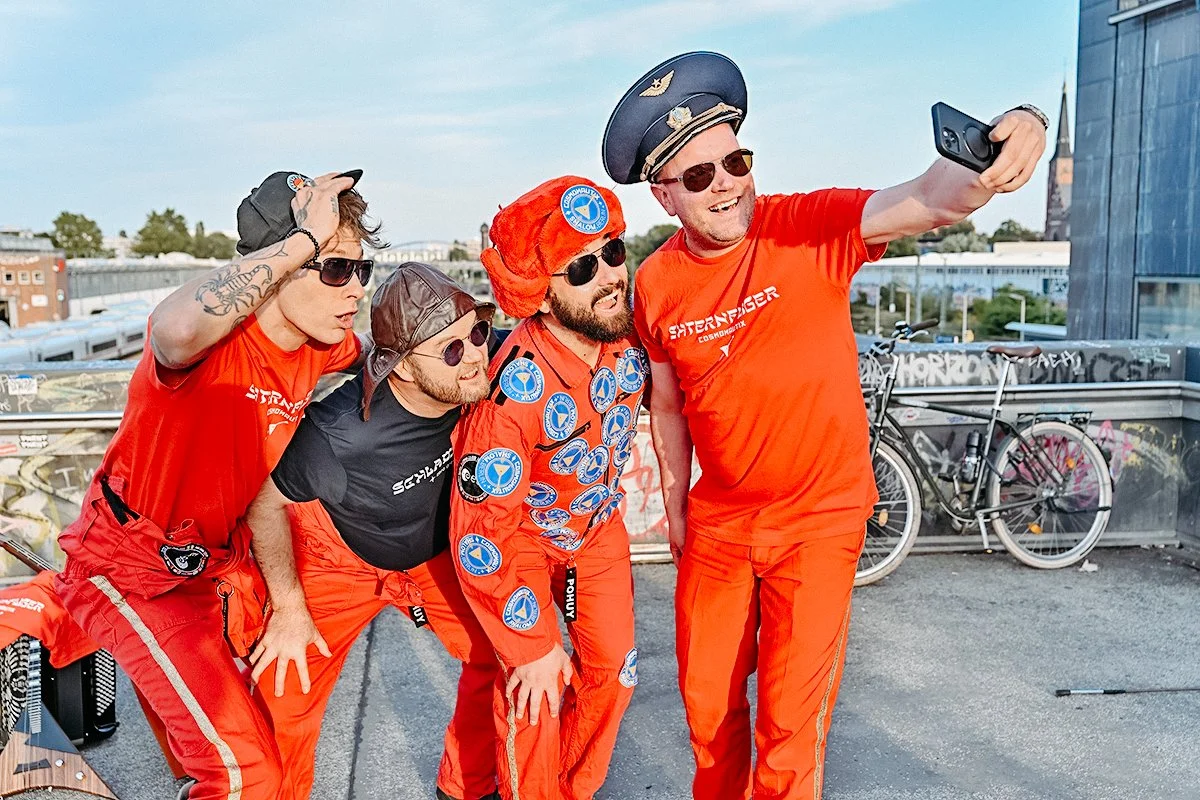
SHTERNFLIGER
Gedruckt in weiß auf rotem Shirt – inspiriert durch die ikonischen Bühnen-Overalls der Band.
Das zweite Motiv bleibt der typisch lakonischen Handschrift von SHALOM.BERLIN treu:
SCHLAMASSEL zero gravity
Gedruckt wird in weiß auf navyblauem Shirt.
Im Nacken beider Shirts findet sich dezent der gemeinsame Absender: SHALOM.BERLIN × COSMONAUTIX
Bio-Baumwolle ist auch im Orbit Pflicht.
Ergänzt werden die Shirts durch ein Patch im Stil historischer Raumfahrtmissionen – selbstverständlich mit einer Raketen-Balalaika als zentralem Motiv.
Die Shirts landen am 19. September 2026 beim Open-Air-Konzert von COSMONAUTIX in der Alexandrowka Potsdam. Dort präsentiert die Band die neue Edition erstmals live im Konzert.
Direkt vor Ort gibt es Shirts und Missions-Patches in limitierter Stückzahl.
Beide Shirts und das Patch sind ab sofort im Webshop von SHALOM.BERLIN erhältlich.
SHTERNFLIGER ist keine klassische Merchandise-Kooperation.
Die Edition verbindet die kreative Handschrift von SHALOM.BERLIN mit der musikalischen Identität von COSMONAUTIX – und macht daraus Shirts mit Geschichte. Mission accomplished?
SHALOM.BERLIN entwickelt Streetwear mit jiddischen Begriffen und Berliner Haltung. Statt Logos stehen Wörter im Mittelpunkt – reduziert, ironisch und mit einer großen Portion Sprachliebe.
Seit über zwei Jahrzehnten verbinden COSMONAUTIX Klezmer, Balkan Beats, Punk und osteuropäische Folklore zu ihrem unverwechselbaren Rocket Balalaika Speedfolk – laut, tanzbar und garantiert nicht schwerelos.
Hier gehts zum Fotoshooting im spacebook.

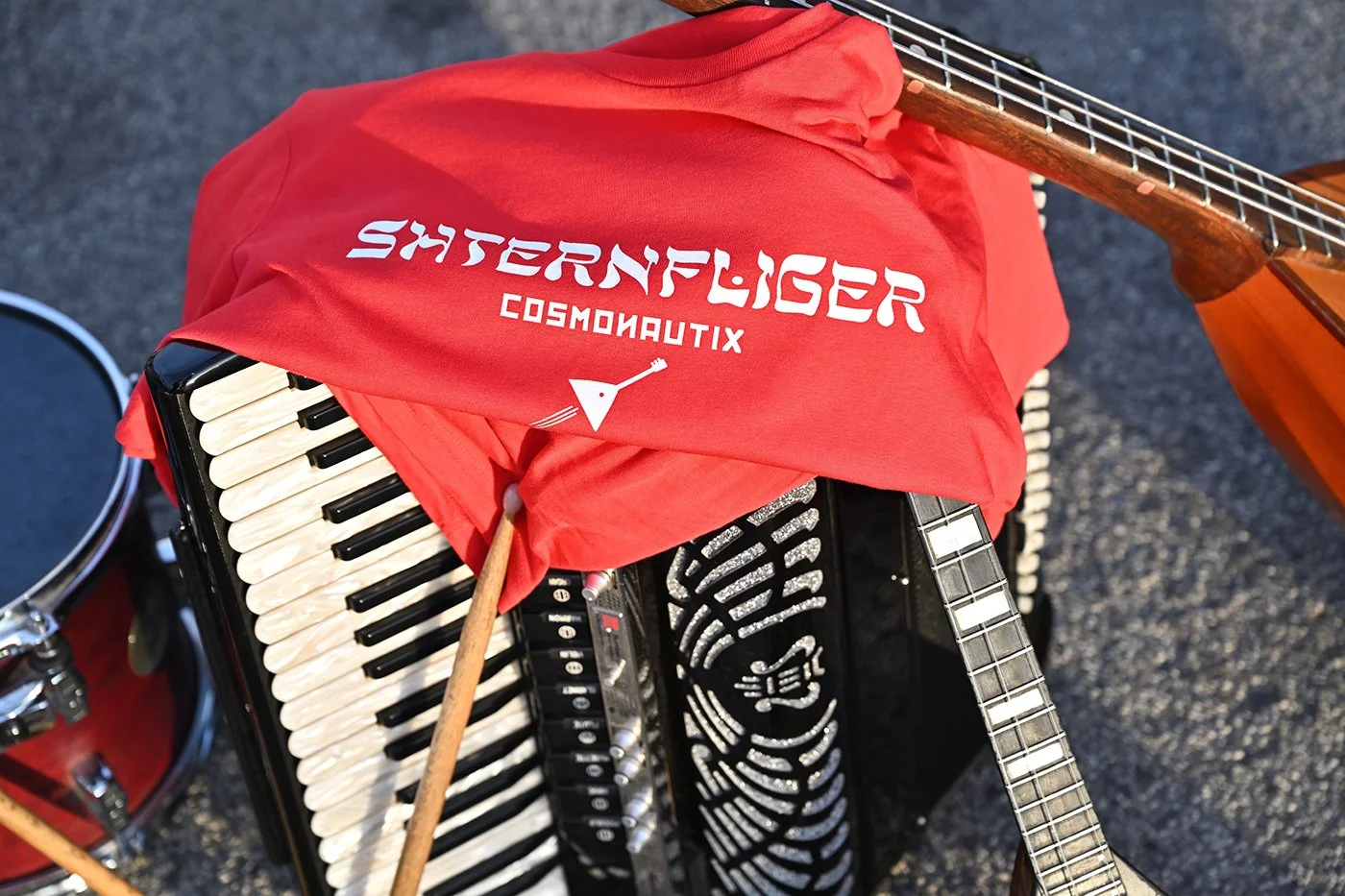
Fotos: Fotografenmeister Manuel Tennert für SHALOM.BERLIN x COSMONAUTIX
NOW is a little different
We’re not Jewish ourselves.
We just try to be a MENSCH.
Doesn’t always work.
But this new collection did.
SHALOM.BERLIN NOW is a little different from our regular line.
Different type. Different language. Different references.
Usually, SHALOM.BERLIN takes German words of Yiddish origin and puts them back into the spotlight.
SCHLAMASSEL.
MISCHPOCHE.
CHUZPE.
MESCHUGGE.
Words that have been part of the German language for generations — often without people even knowing where they came from.
NOW doesn’t.
NOW goes straight to Jewish words, rituals and references.
No pseudo-Hebrew typeface.
No German words with Yiddish roots.
A different look altogether.
Still SHALOM.BERLIN.
Just… NOW.
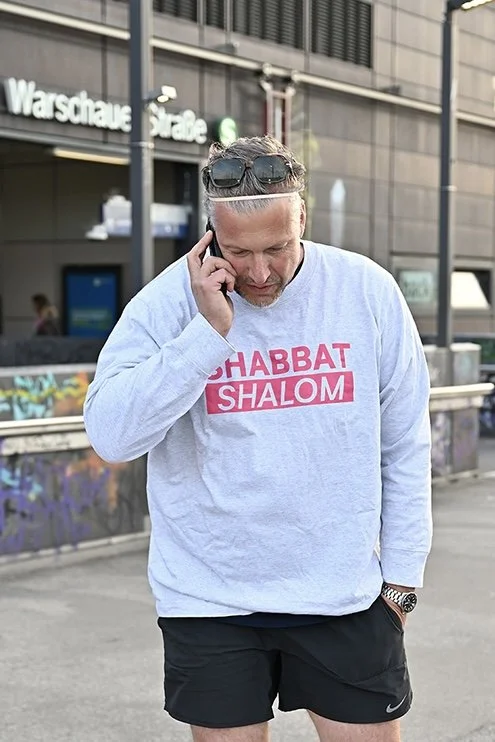
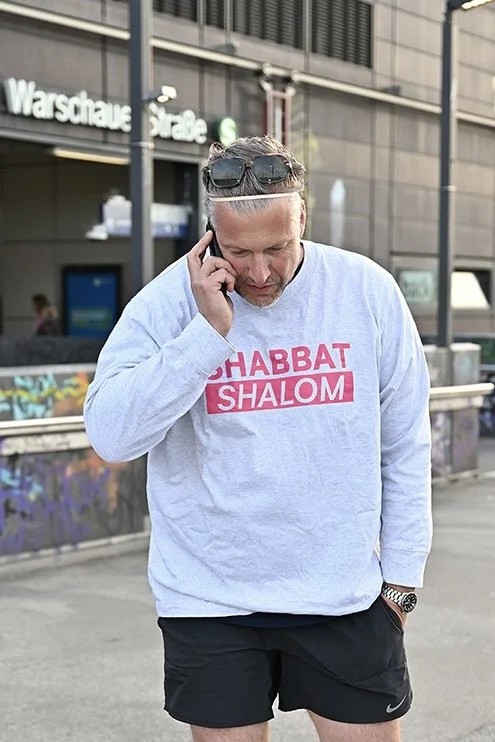
There’s SHABBAT SHALOM.
Made for Fridays.
Works pretty well on Monday, too.
There’s 613 MITZVOT.
A Jewish number with quite a to-do list attached.
That should keep you busy.
There’s TZADIKIM 36.
Thirty-six righteous people who, according to Jewish tradition, keep the world going without anybody knowing who they are.
We put the number on a shirt. 36. If you know, you know.
And there’s LECHAIM SCHATZI.
To life.
And to you, Schatzi.
A little Jewish toast.
A little Bavaria.
Preferably with a Maß nearby.
And then there’s the shalom.berlin kippah.
We actually didn’t plan that one.
A rabbi asked us to make one.
So we did.
Black denim.
SHALOM.BERLIN on the outside.
Gut Shabbes! on the inside.
Just between you and your kippah.
That’s SHALOM.BERLIN NOW.
Jewish words, rituals and traditions.
Dressed for today.
Social Design
Wir haben uns beim Social Design Award 2026 beworben, dem Leserwettbewerb des SPIEGEL, bei dem Initiativen und Projekte mitmachen können, die Menschen in Verbindung bringen und zum besseren Miteinander beitragen. Einreichungsfrist bis 31.08.2026.
Wir teilen hier unsere Bewerbung wie folgt:
Kurzbeschreibung des Projekts
SHALOM.BERLIN macht sichtbar, wie eng jiddische und deutsche Sprache miteinander verbunden sind. Viele Wörter jiddischer Herkunft – etwa Mischpoke, Schlamassel oder Chuzpe – sind längst selbstverständlicher Teil der deutschen Sprache, ohne dass ihre Herkunft vielen Menschen bewusst ist.
SHALOM.BERLIN übersetzt diese sprachliche Verbindung in zeitgenössisches Design und Streetwear. Kleidung wird so zum niedrigschwelligen Gesprächsanlass: über Wörter, ihre Herkunft und darüber, dass das Judentum selbstverständlicher Teil unserer gemeinsamen Kultur ist.
Was ist das Ziel des Projekts?
SHALOM.BERLIN möchte jüdische Kultur dort sichtbar machen, wo Menschen ihr im Alltag begegnen: auf der Straße, im Café, beim Einkaufen oder auf Veranstaltungen.
Im Mittelpunkt stehen keine politischen Botschaften und keine religiöse Vermittlung, sondern Sprache. Wörter wie MISCHPOCHE, SCHLAMASSEL, CHUZPE oder MESCHUGGE zeigen ganz selbstverständlich, wie tief jiddische Sprache in der deutschen Alltagssprache verankert ist.
Diese oftmals unbekannte Verbindung schafft einen niedrigschwelligen Zugang zu jüdischer Kultur. Ein T-Shirt kann dabei etwas leisten, was klassische Informationsangebote häufig nicht schaffen: Es weckt Neugier, provoziert eine Frage und bringt Menschen miteinander ins Gespräch.
Welche sozialen Aspekte spielen eine Rolle?
SHALOM.BERLIN schafft Begegnung über etwas, das Menschen bereits miteinander teilen: Sprache.
Viele Menschen benutzen Wörter jiddischer Herkunft, ohne zu wissen, woher sie stammen. Die überraschende Erkenntnis, dass diese Begriffe Teil der eigenen Alltagssprache sind, verändert den Blick auf jüdische Kultur. Sie erscheint nicht als etwas Fremdes oder ausschließlich Historisches, sondern als selbstverständlicher Bestandteil der Gegenwart.
Die Kleidung funktioniert dabei als Gesprächsanlass. Menschen fragen nach der Bedeutung eines Wortes, erzählen von eigenen Erfahrungen oder entdecken Begriffe wieder, die sie aus ihrer Familie oder Kindheit kennen.
So entstehen niedrigschwellige Begegnungen und Gespräche über jüdisches Leben, ohne dass zunächst eine politische oder religiöse Positionierung notwendig ist.
Gerade in einer Zeit, in der jüdisches Leben häufig vor allem im Zusammenhang mit Antisemitismus, Konflikten oder Bedrohung wahrgenommen wird, setzt SHALOM.BERLIN bewusst ein anderes Bild dagegen: jüdische Kultur als lebendigen, selbstverständlichen und sichtbaren Teil unserer gemeinsamen Gesellschaft.
Was ist innovativ an dem Projekt?
SHALOM.BERLIN verbindet Sprachgeschichte, jüdische Kultur, zeitgenössisches Design und Streetwear.
Die Begriffe werden nicht museal erklärt oder ausschließlich in klassischen Bildungsformaten vermittelt, sondern als selbstverständlicher Bestandteil moderner Alltagskultur inszeniert.
Charakteristisch für die Gestaltung ist die Verbindung aus einem deutschen Wort jiddischer Herkunft, einer pseudohebräisierten Typografie und einem kurzen englischen, häufig frechen oder lakonischen Zusatz mit Berliner Schnauze.
So wird aus Sprachvermittlung kein Lehrstück, sondern ein tragbares Statement.
Hinzu kommt ein bewusst niedrigschwelliger Vertriebs- und Kommunikationsansatz: Die Produkte begegnen Menschen im Webshop, über Social Media, bei Veranstaltungen, in Geschäften und an Orten jüdischer Kultur.
SHALOM.BERLIN versteht Kleidung damit nicht nur als Produkt, sondern als Medium für kulturelles Storytelling.
Wie trägt das Projekt zum gesellschaftlichen Zusammenhalt bei?
SHALOM.BERLIN beginnt nicht bei den Unterschieden zwischen Menschen, sondern bei etwas, das sie bereits verbindet.
Sprache ist Teil unserer gemeinsamen kulturellen Identität. Dass zahlreiche vermeintlich „deutsche“ Alltagsbegriffe jiddische Wurzeln haben, zeigt auf sehr konkrete Weise, wie eng jüdische und deutsche Geschichte und Kultur miteinander verflochten sind.
Wer erkennt, dass Mischpoke, Schlamassel oder Chuzpe Teil der eigenen Sprache sind, entdeckt jüdische Kultur nicht als etwas außerhalb der Mehrheitsgesellschaft, sondern mitten in ihr.
Diese Perspektive kann Vorurteile nicht allein beseitigen. Sie kann aber Nähe schaffen, Neugier auslösen und Gespräche ermöglichen.
Genau darin liegt der Ansatz von SHALOM.BERLIN: gesellschaftlichen Zusammenhalt nicht über große Appelle zu formulieren, sondern über kleine, alltägliche Begegnungen.
Ein Wort auf einem T-Shirt kann der Anfang eines solchen Gesprächs sein.
Wie wird das Projekt bereits umgesetzt?
SHALOM.BERLIN ist kein Konzept auf dem Papier, sondern bereits realisiert. Die Website/den Webstore gibt es seit dem 14.09.2025.
Die Marke verfügt über einen eigenen Onlineshop. Darüber hinaus werden die Produkte bei Veranstaltungen und über stationäre Partner präsentiert.
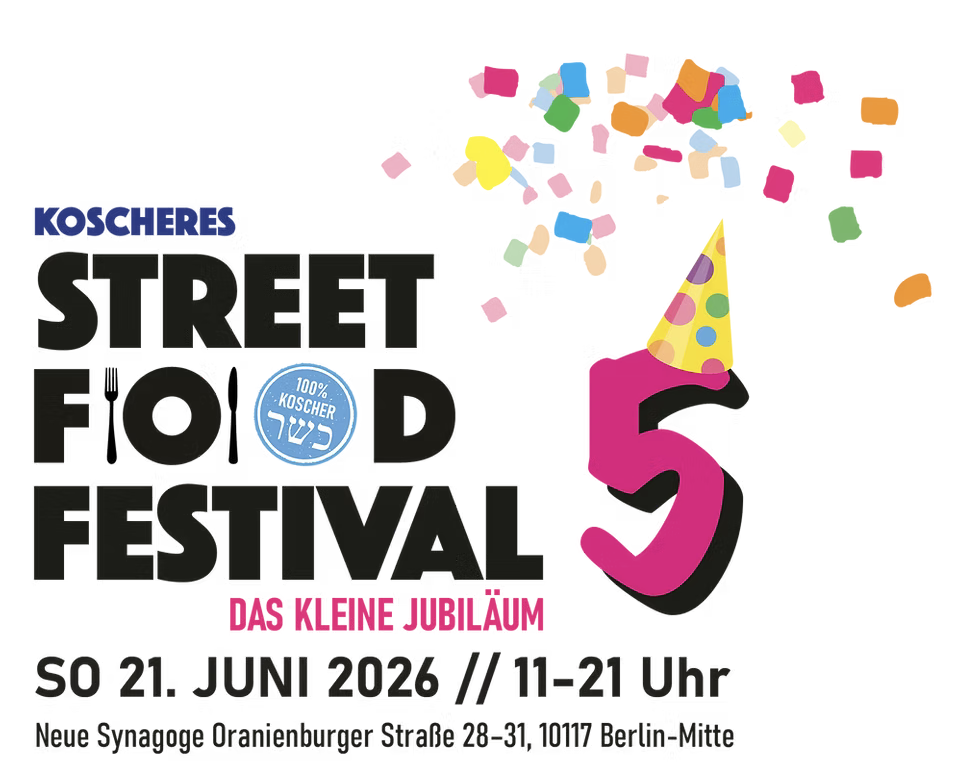
Beim Koscheren Streetfood Festival im Hof der Neuen Synagoge Berlin 2025 konnte das Konzept bereits unmittelbar erprobt werden. Dort entstanden zahlreiche Gespräche mit sehr unterschiedlichen Besucherinnen und Besuchern über die Wörter, ihre Herkunft und die Idee hinter der Marke.
Produkte von SHALOM.BERLIN sind im Levy’s Contor in den Hackeschen Höfen erhältlich sowie im Museumsshop der Neuen Synagoge Berlins. Weitere Kooperationen sind in Vorbereitung.
Damit bewegt sich das Projekt bewusst zwischen digitaler Kommunikation, Mode, Kulturvermittlung und realen Begegnungsorten.
Welche Materialien und Kommunikationsmittel werden eingesetzt?
Im Zentrum stehen Kleidungsstücke wie T-Shirts, Longsleeves, Caps und weitere Accessoires.
Ergänzt werden sie durch Sticker, Patches, Plakate, QR-Codes, den Webshop sowie redaktionelle und audiovisuelle Inhalte auf Social Media.
Die Produkte selbst sind dabei das wichtigste Kommunikationsmedium: Sie tragen die Begriffe in den öffentlichen Raum und schaffen dort Sichtbarkeit.
Social Media erweitert diese Ebene um die Geschichten hinter den Wörtern, Kooperationen und Menschen, die SHALOM.BERLIN tragen.
Was motiviert das Projekt?
Ausgangspunkt von SHALOM.BERLIN war die Beobachtung, dass unglaublich viele Wörter jiddischer Herkunft völlig selbstverständlich zur deutschen Sprache gehören – ihre Herkunft aber kaum bekannt ist.
Daraus entstand die Frage: Kann man diese Verbindung sichtbar machen, ohne daraus ein klassisches Bildungsprojekt zu machen?
Die Antwort war Streetwear.
Die ersten Reaktionen haben gezeigt, dass das Prinzip funktioniert. Menschen entdecken Wörter neu, erzählen Geschichten dazu, verschenken Shirts, kommen bei Veranstaltungen ins Gespräch oder sprechen andere Menschen aufgrund eines getragenen Begriffs an.
Aus einer zunächst kleinen Idee ist dadurch innerhalb kurzer Zeit eine wachsende Community entstanden.
SHALOM.BERLIN möchte diese Entwicklung fortsetzen und gemeinsam mit kulturellen Einrichtungen, Künstlern, Unternehmen und anderen Partnern neue Formen finden, jüdische Kultur selbstverständlich im Alltag sichtbar zu machen.
Was sollten wir sonst noch wissen?
SHALOM.BERLIN ist bewusst keine Kampagne gegen Antisemitismus im klassischen Sinne.
Die Marke setzt früher an.
Sie möchte dazu beitragen, dass jüdische Kultur nicht erst dann sichtbar wird, wenn über Antisemitismus gesprochen wird. Sie soll als lebendiger und selbstverständlicher Bestandteil unseres Alltags wahrgenommen werden.
Dabei hilft die deutsche Sprache selbst.
Denn viele Menschen tragen ein kleines Stück jiddischer Kultur längst mit sich herum – jedes Mal, wenn sie von ihrer Mischpoke sprechen, Chuzpe bewundern, im Schlamassel stecken oder jemanden einen “echten Menschen” nennen.
SHALOM.BERLIN macht genau diese Verbindung sichtbar.
LECHAIM, SCHATZI
A shirt for the Wiesn. A toast to life.
There are words that don’t need much explaining.
LECHAIM is one of them.
Hebrew for to life, it’s what you say when glasses are raised, friends come together and there’s a reason to celebrate. Or no particular reason at all.
We thought that sounded pretty perfect for Munich in September.
So we made a shirt.
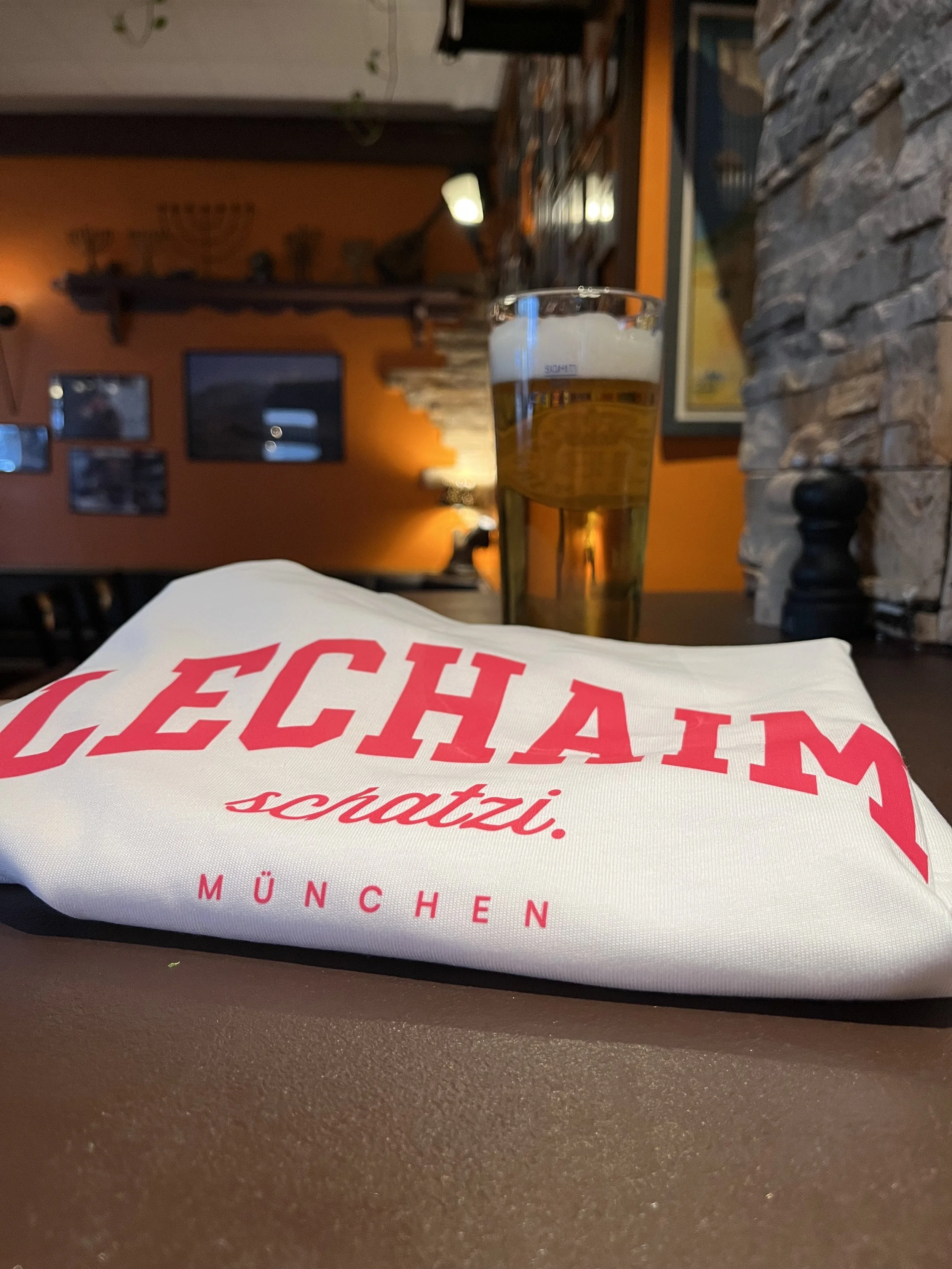
LECHAIM schatzi.
Our little contribution to Oktoberfest 2026.
White shirt. Blue print. Or pink print. A little LECHAIM running down the sleeve. Made for beer gardens, long tables, questionable amounts of pretzels and that moment when someone lifts a Maß and suddenly everybody is your best friend.
But this one isn’t really about beer.
It’s about the toast behind it.
About getting together. Being loud. Laughing too much. Staying a little longer than planned. And occasionally remembering that being here is actually something worth celebrating.
Because before there was Prost, there was a pretty good idea: To life.
Or, as we like to say:
LECHAIM, schatzi.
Made in Berlin. Ready for the Wiesn.
SHALOM.BERLIN im Museumsshop der Neuen Synagoge Berlin
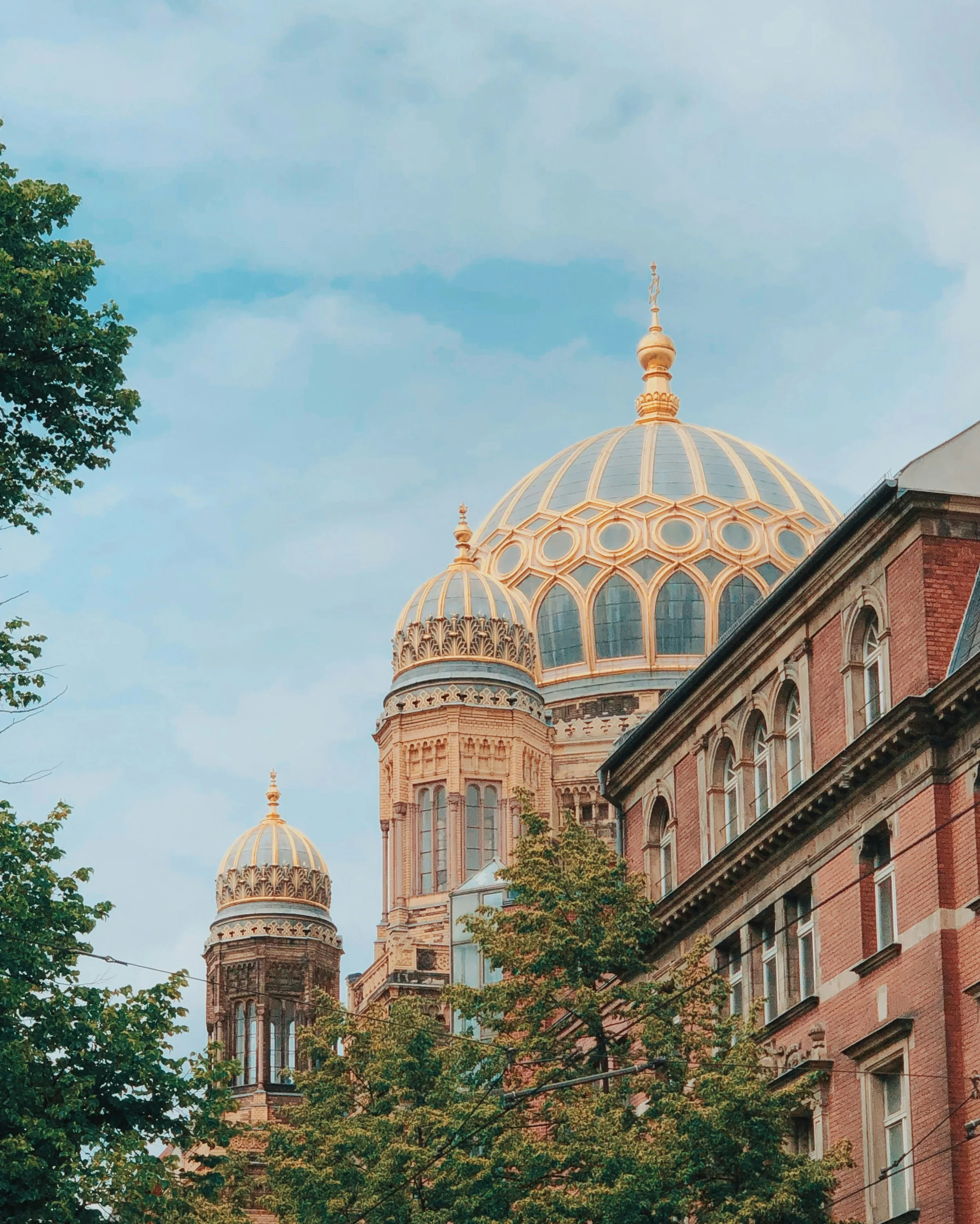
Ab sofort gibt’s eine kleine Auswahl von SHALOM.BERLIN-Shirts im Museumsshop des Centrum Judaicum in der Neuen Synagoge Berlin. Besucherinnen und Besucher können dort drei ausgewählte Shirts direkt vor Ort entdecken – mitten in einem der bedeutendsten Orte jüdischer Geschichte und Kultur in Deutschland.
Für unsere kleine Love Brand ist das weit mehr als ein neuer Touchpoint. Es ist eine besondere Auszeichnung und ein Zeichen des Vertrauens, über das wir uns sehr freuen!
Wer den Museumsshop besucht, erhält zudem einen exklusiven Rabattcode für den SHALOM.BERLIN-Webshop. So lässt sich die Kollektion auch nach dem Museumsbesuch weiter entdecken.
Seit dem Launch unseres Webshops im September 2025 verfolgt SHALOM.BERLIN eine einfache Idee: deutsche Wörter jiddischer Herkunft auf Shirts zu bringen.
Dass diese Idee nun auch im Museumsshop der Neuen Synagoge ihren Platz gefunden hat, macht uns stolz.
Unser herzlicher Dank gilt dem Team der Stiftung Centrum Judaicum für das Vertrauen und die Zusammenarbeit.
Wir freuen uns auf viele Besucherinnen und Besucher – im Museumsshop an der Oranienburger Straße und natürlich auch auf SHALOM.BERLIN.
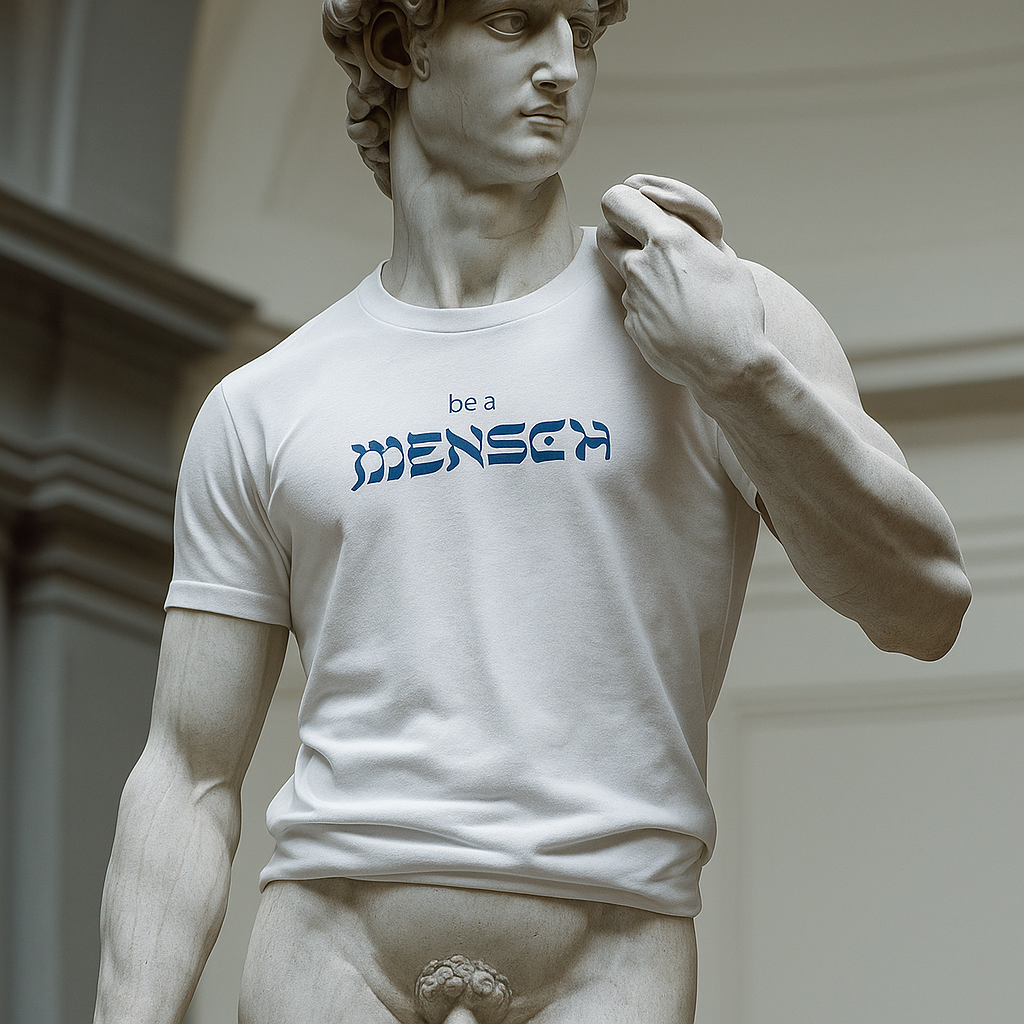
Los Angeles, Paris and Berlin are wearing Yiddish. But not in the same way.
Yiddish words are back on the street.
On T-shirts, caps and sweatshirts. On jewellery, postcards and keychains. Sometimes even on jars of pickles.
At first glance, the idea may seem similar. Look a little closer, however, and three very different stories begin to emerge.
In Los Angeles, Paris and Berlin, three independent labels are working with Yiddish language, Jewish culture and contemporary clothing.
They may share a few words.
Perhaps even a few customers.
But they do not share the same perspective.
Los Angeles: a family story
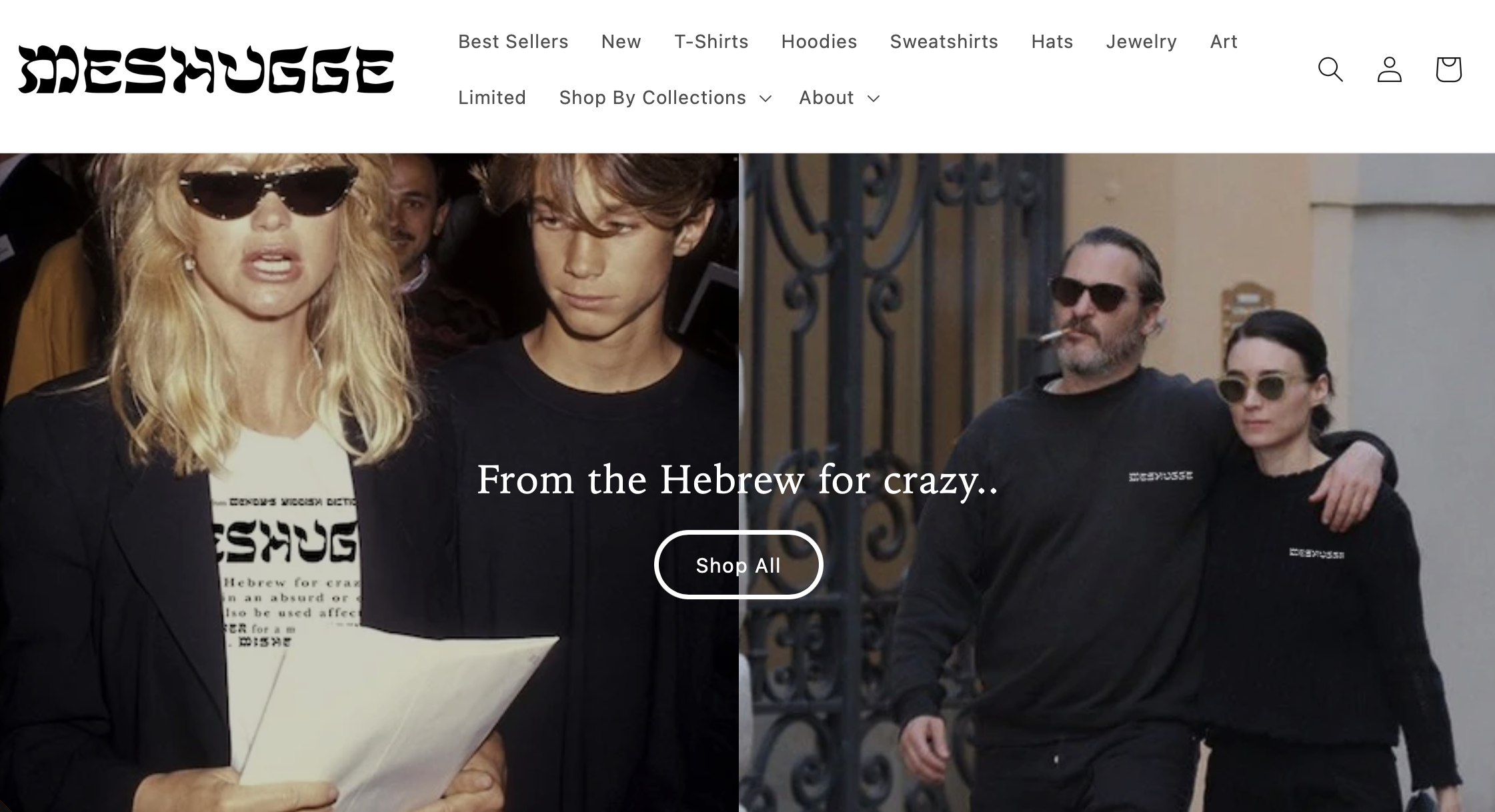
Meshugge was created in honour of the founder’s grandfather, Mendy: a native New Yorker whose independence, creativity, eccentricity and sense of humour continue to shape the brand.
The label is designed in Los Angeles, but its emotional home is unmistakably New York.
Meshugge describes itself as a Jewish clothing brand existing at the intersection of Yiddish culture and premium casualwear. At the same time, it presents itself as an open invitation to anyone who wants to become part of the story.
Its collections carry names such as MENSCH, SCHMUCK, MESHUGGE and OY VEY CLUB.
Many of the designs work almost like wearable dictionary entries: a Yiddish term, its meaning and different linguistic variations. Clothing is accompanied by jewellery, artwork and Judaica.
The communication feels warm, personal and accessible.
It begins with one family story and expands into a broader invitation:
Let’s keep something alive together.
And because this is an American brand, that invitation is communicated quite directly through drops, collections and offers.
Heritage meets retail.
Paris: a living culture
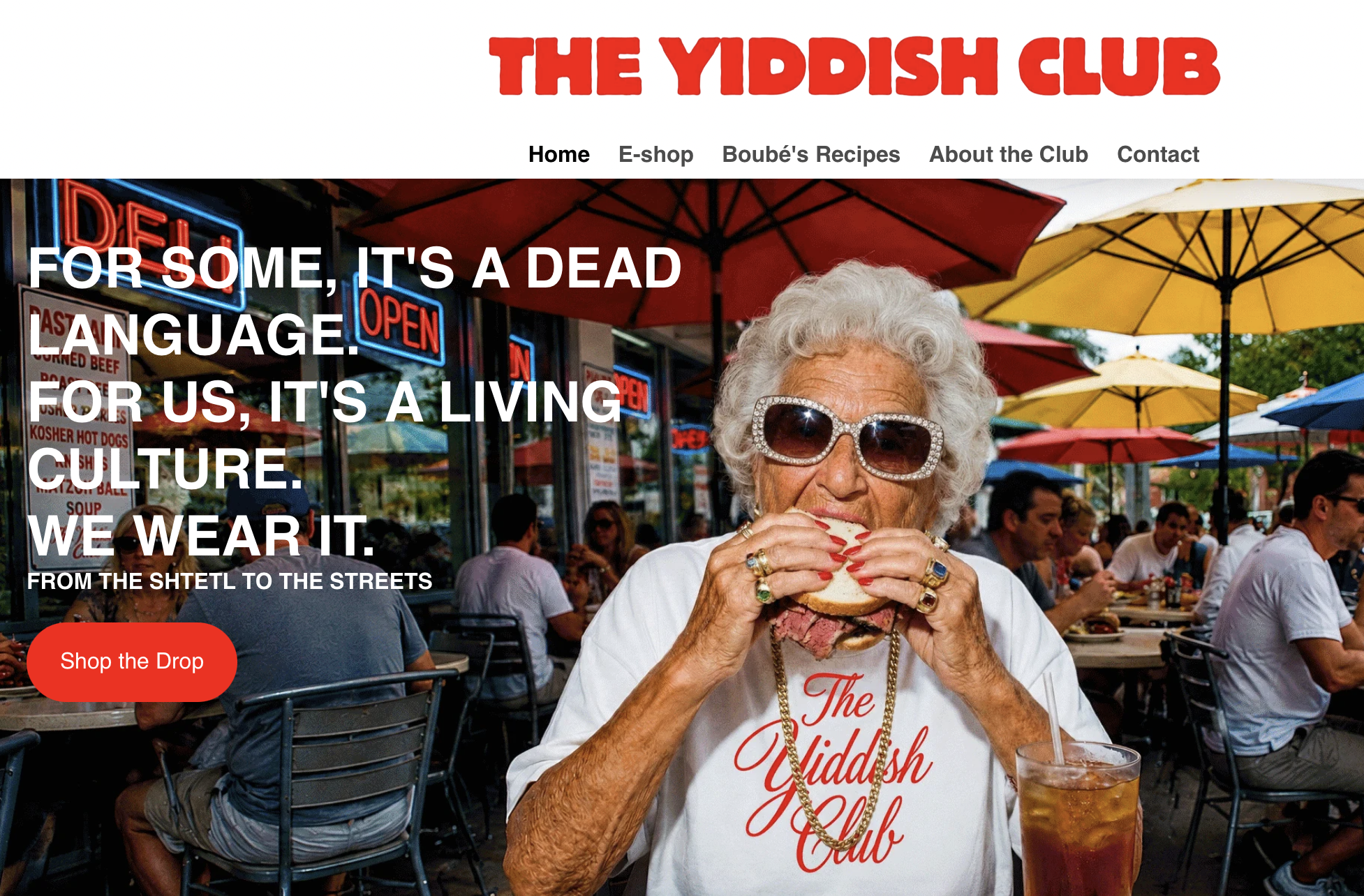
The Yiddish Club begins somewhere else.
“For some, it’s a dead language. For us, it’s a living culture.”
This sentence is more than a slogan.
It is the entire concept.
For The Yiddish Club, Yiddish does not live in words alone. It lives in the smell of strudel, the taste of kreplach, an accent, a joke, a memory, an object and a certain sense of style.
The brand wants to make that heritage visible, alive and desirable.
Accordingly, The Yiddish Club does not simply sell clothes.
It creates a world.
That world includes Boubé’s recipes, playlists moving between old delis, dirty rap, smoky jazz and Miami in 1987. It includes pickles, postcards and collaborations with places connected to Jewish life and culture in Paris.
For a collaboration with Florence Kahn, an institution in the Marais, even a sandwich was treated as a piece of cultural heritage.
The accompanying shirt tells a story about pastrami, the Pletzl, family recipes and a historic shop in the Rue des Écouffes.
The communication is poetic, sensual and carefully curated.
A little shtetl.
A little Lower East Side.
A great deal of Paris.
You are not simply buying a T-shirt.
You are joining a club.
Berlin: the word is the design
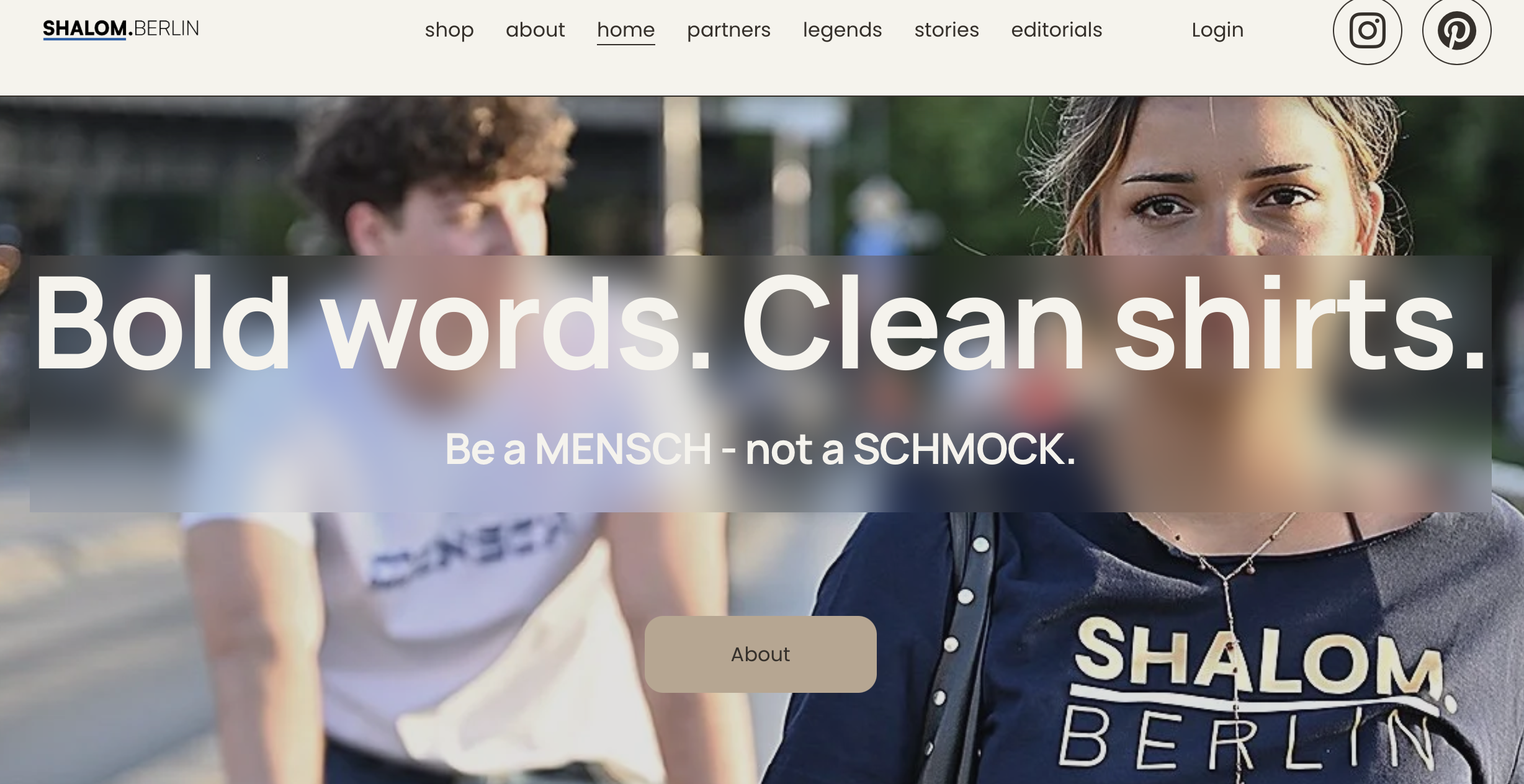
SHALOM.BERLIN takes a different approach again.
We are not dealing with Yiddish as a closed or historical language. Nor are we creating Jewish fashion in the traditional sense.
We are dealing with words.
Words of Yiddish origin that have long since become part of everyday German.
Words such as MENSCH, SCHLAMASSEL, CHUZPE, PLEITE or MALOCHER.
They are used every day, often by people who no longer know where they came from.
SHALOM.BERLIN does not take these words out of a museum.
We put them back on the street.
Reduced to one expression and one short comment:
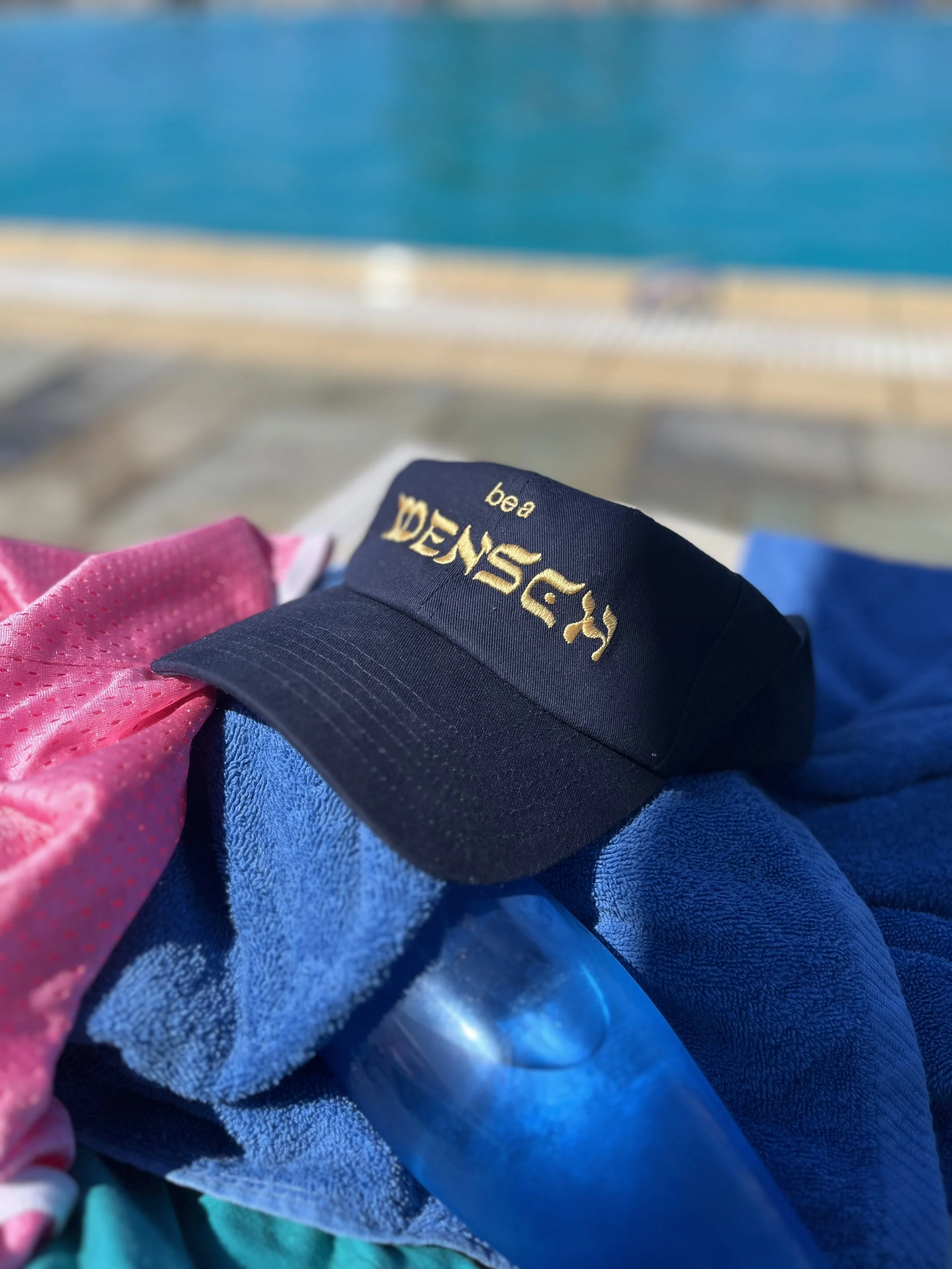
be a MENSCH
don’t be a SCHMOCK
MALOCHER — stay dirty
PLEITE — berlin standard
No dictionary definitions.
No folklore.
No nostalgic reconstruction.
Just language, irony and Berlin.
The visual language follows the same principle: clear typography, a limited colour palette, short sentences and real locations across the city.
Where Meshugge continues a family story and The Yiddish Club creates an entire cultural world, SHALOM.BERLIN points towards something that is already here: the Yiddish sound within the German language.
You only have to listen closely.
Same roots? Different stories.
Perhaps the three perspectives can be summed up like this:
Los Angeles wears memory.
Paris turns culture into a world.
Berlin puts words back on the street.
Meshugge seems to say: Let’s preserve this heritage.
The Yiddish Club says: Let’s live inside it.
SHALOM.BERLIN says: It is already part of our everyday lives.
None of these perspectives is more correct than the others.
They simply begin in different places:
with a person,
with a culture,
and with a language.
Perhaps that is exactly what makes them interesting.
Yiddish does not appear here as one uniform retro trend.
It is developing new forms, new images and new accents.
In Los Angeles.
In Paris.
In Berlin.
Same roots?
Maybe.
Same style?
Not at all.
Good.
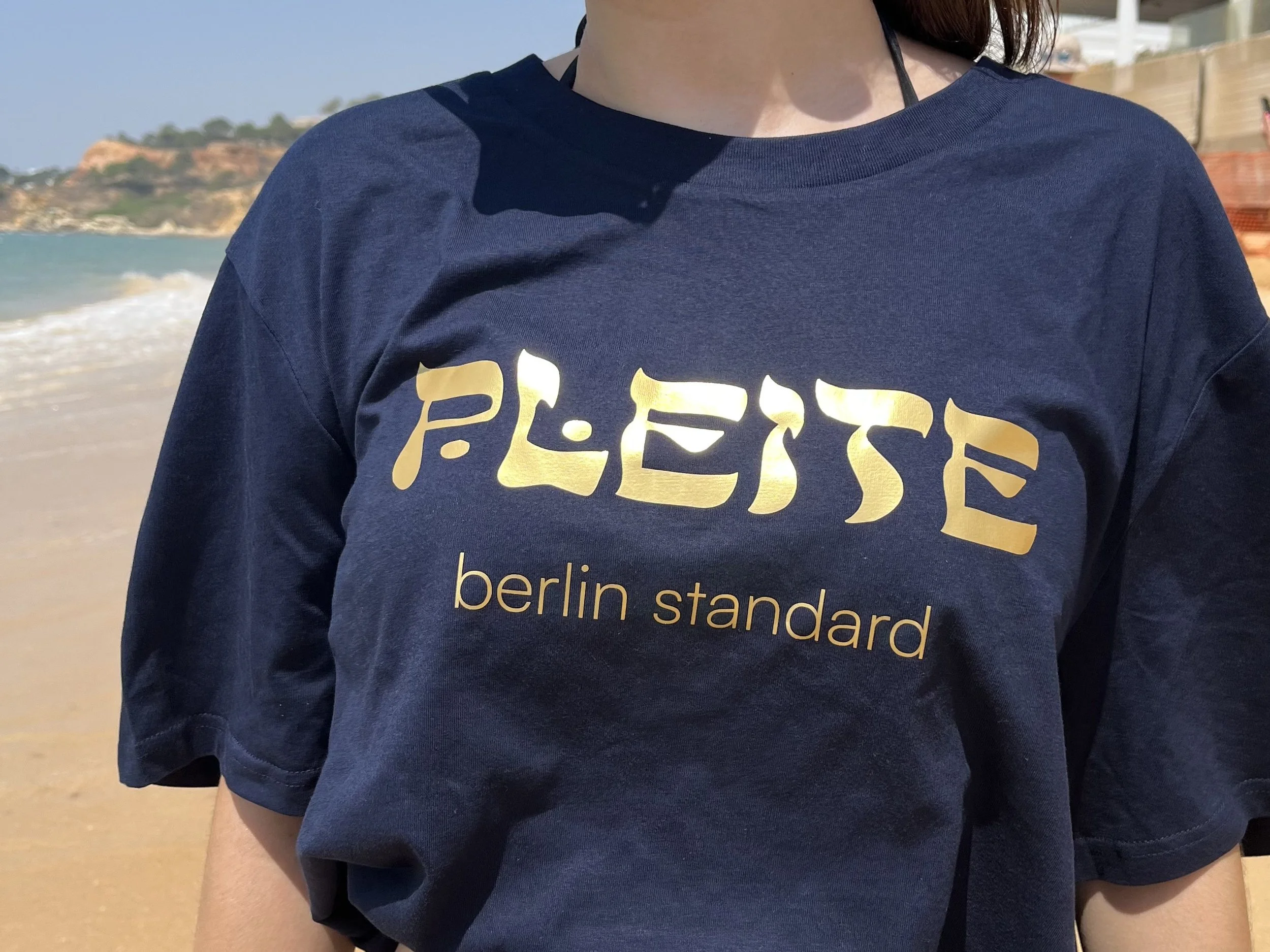
Ein Jahr SHALOM.BERLIN. Geburtstagsshirt PLEITE.
Vor einem Jahr ging der Webshop von SHALOM.BERLIN online.
Seitdem ist einiges passiert. Das feiern wir mit einem Geburtstagsshirt:
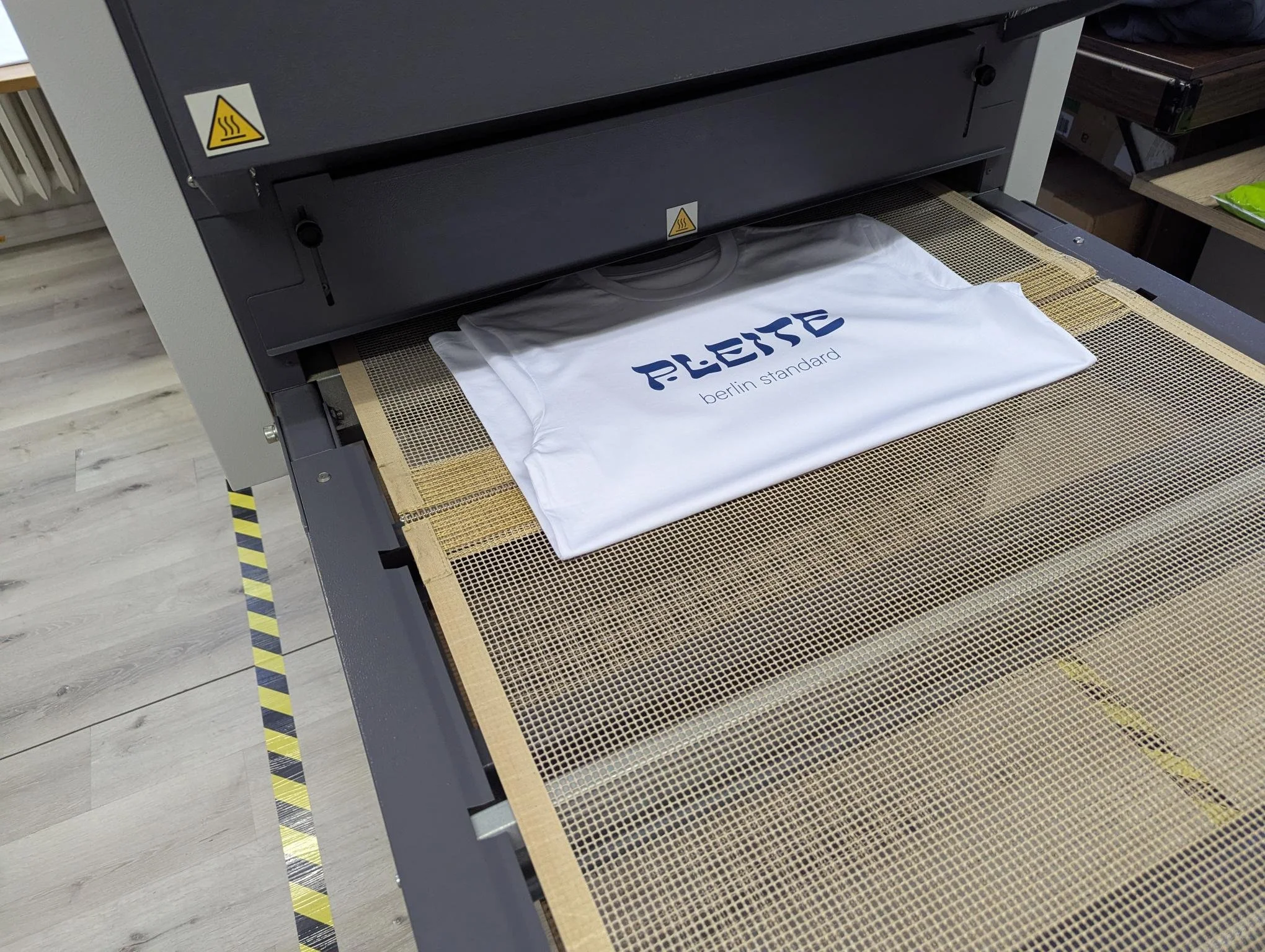
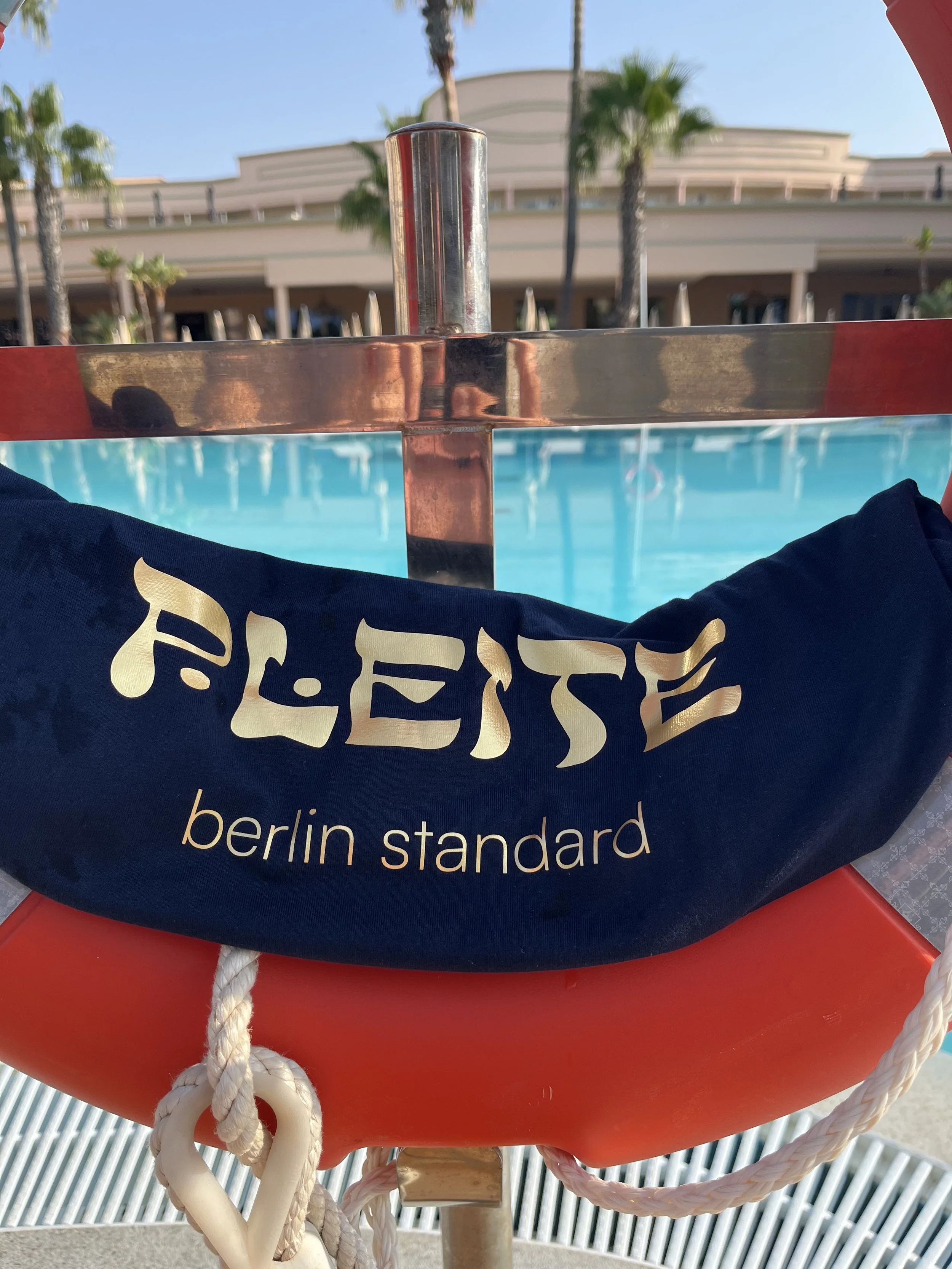
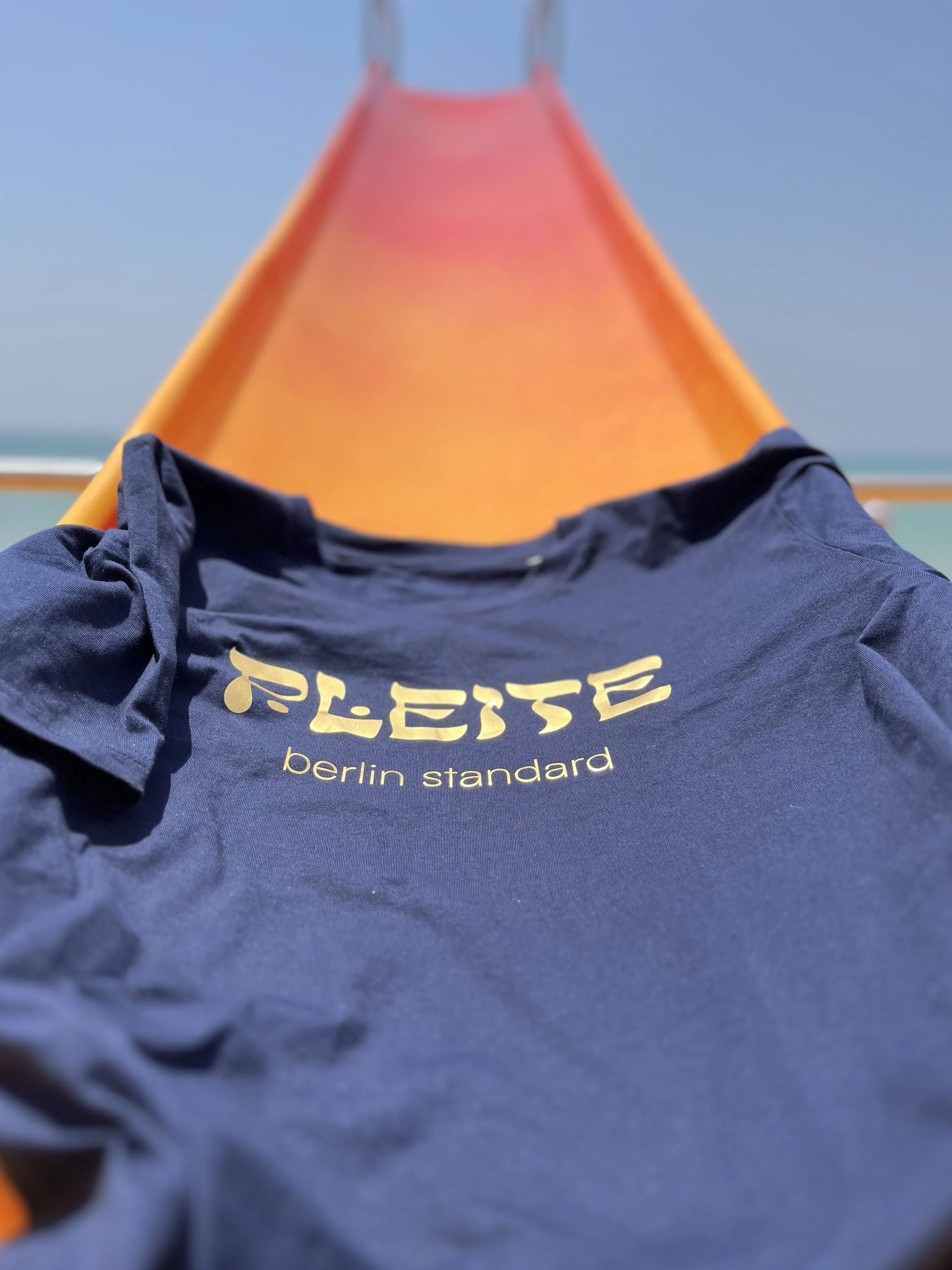
PLEITE
berlin standard
Navyblau. Goldener Print.
Denn wenn schon pleite, dann wenigstens mit Stil.
Being broke never looked so glamorous.
Danke an alle, die unsere kleine Love Brand im ersten Jahr begleitet, getragen, geteilt, empfohlen oder einfach gut gefunden haben.
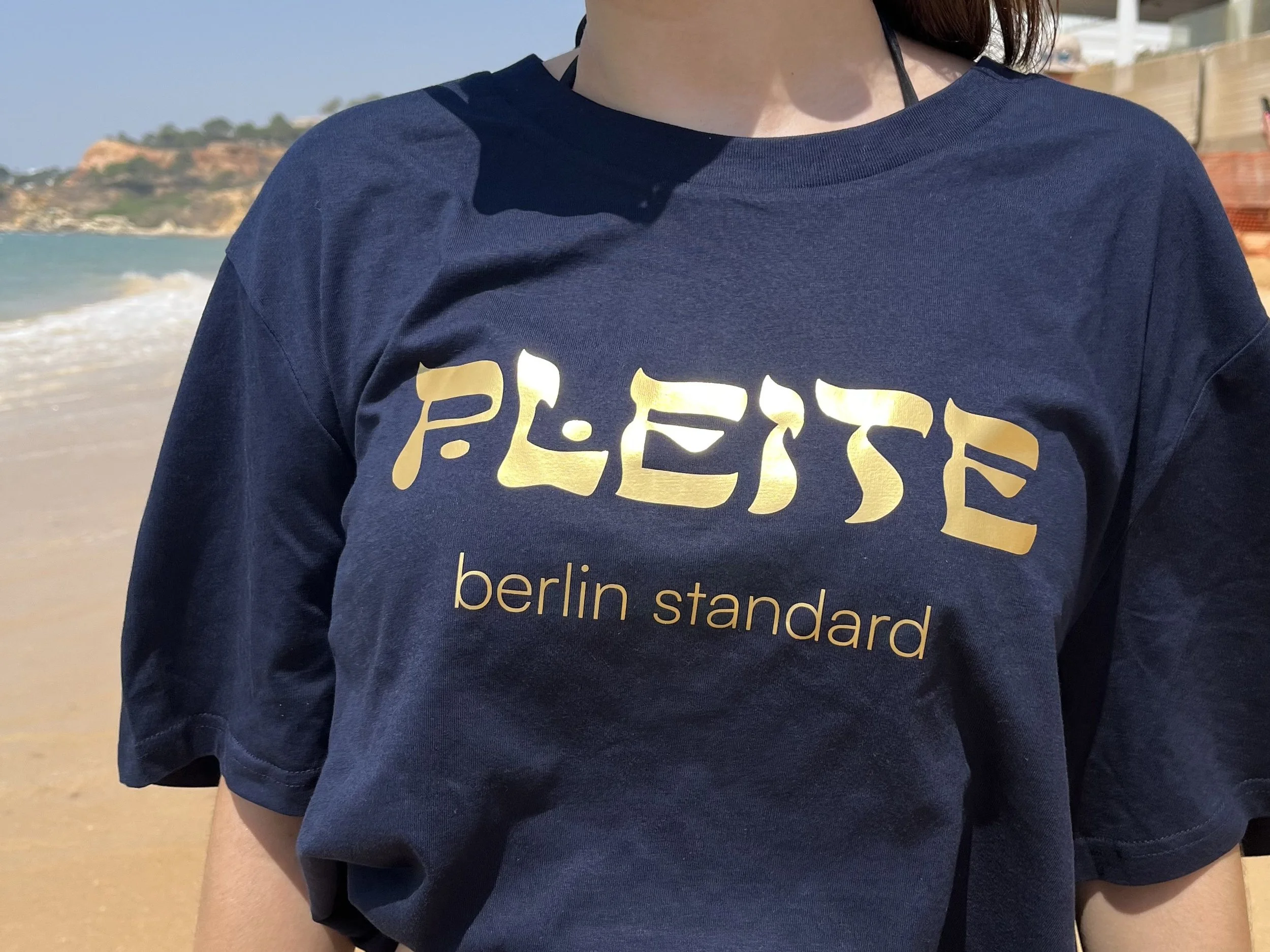
Sometimes you win, sometimes you're broke.
To celebrate one year of SHALOM.BERLIN, our most Berlin design returns as a special GOLDEN anniversary edition: navy cotton with a gold print. Yes!
Because if you're going to be pleite, at least do it in style.
Being broke never looked so glamorous.
Made from premium organic cotton. Unisex fit. Designed in Berlin.
Limited Anniversary Edition.
Worte finden Verbündete
Auf der Website von SHALOM.BERLIN steht: For people with brain and backbone.
Natürlich war das nie als Zugangsvoraussetzung gemeint. Niemand muss einen Intelligenztest bestehen, um eines unserer T-Shirts zu tragen.
Und trotzdem stellen wir nach knapp einem Jahr fest: In diesem Satz steckt mehr Wahrheit, als wir ursprünglich gedacht haben.
Denn die Community von SHALOM.BERLIN besteht aus bemerkenswert vielen Menschen mit Neugier, Haltung und Interesse an Sprache.
Menschen, die wissen möchten, woher Wörter kommen.
Menschen, die sich für Kultur interessieren.
Menschen, die Humor schätzen.
Menschen, die keine Angst vor Differenzierung haben.
Wer sich für Begriffe wie SCHLAMASSEL, CHUZPE oder MALOCHER begeistert, interessiert sich meist auch für Geschichte, Herkunft und Zusammenhänge.
Deshalb freuen wir uns besonders über die Unterstützung von Orten, die genau dafür stehen.
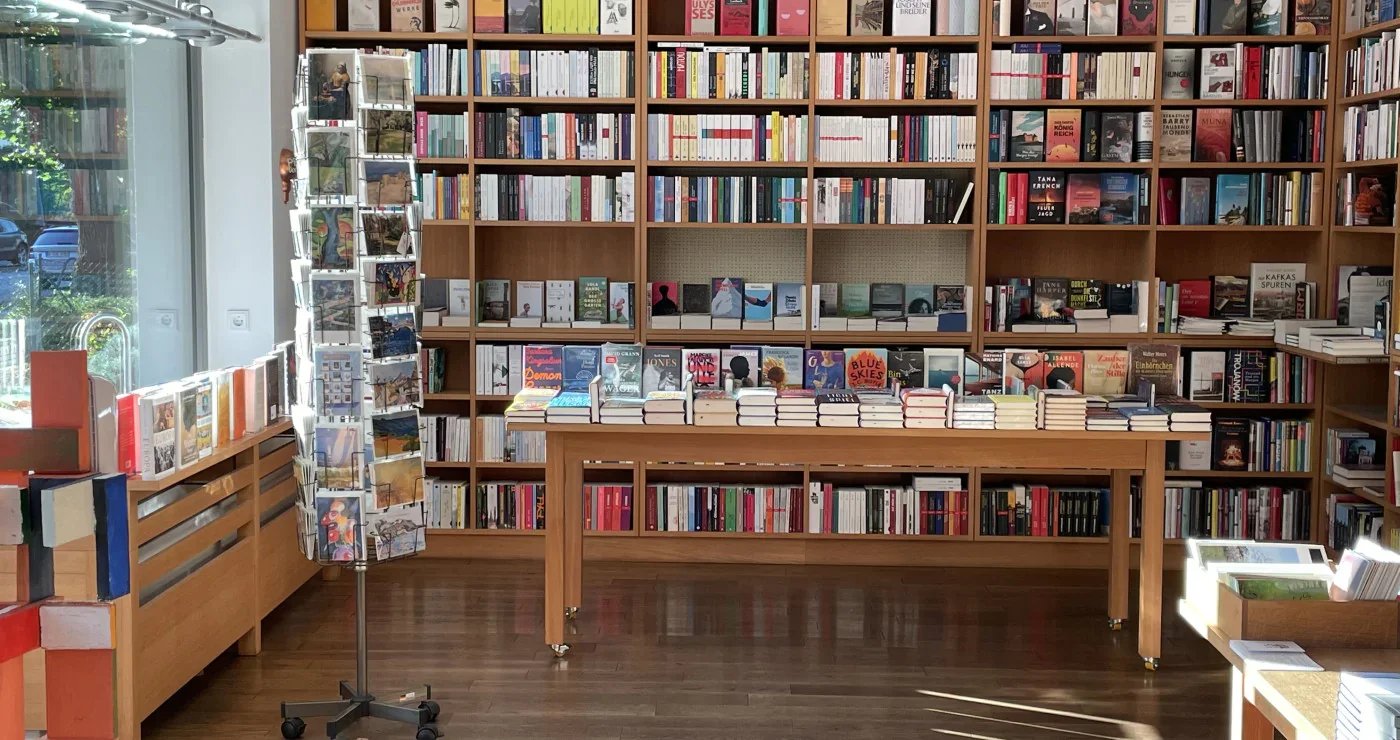
Zum Beispiel die Buchhandlung Braun & Hassenpflug.
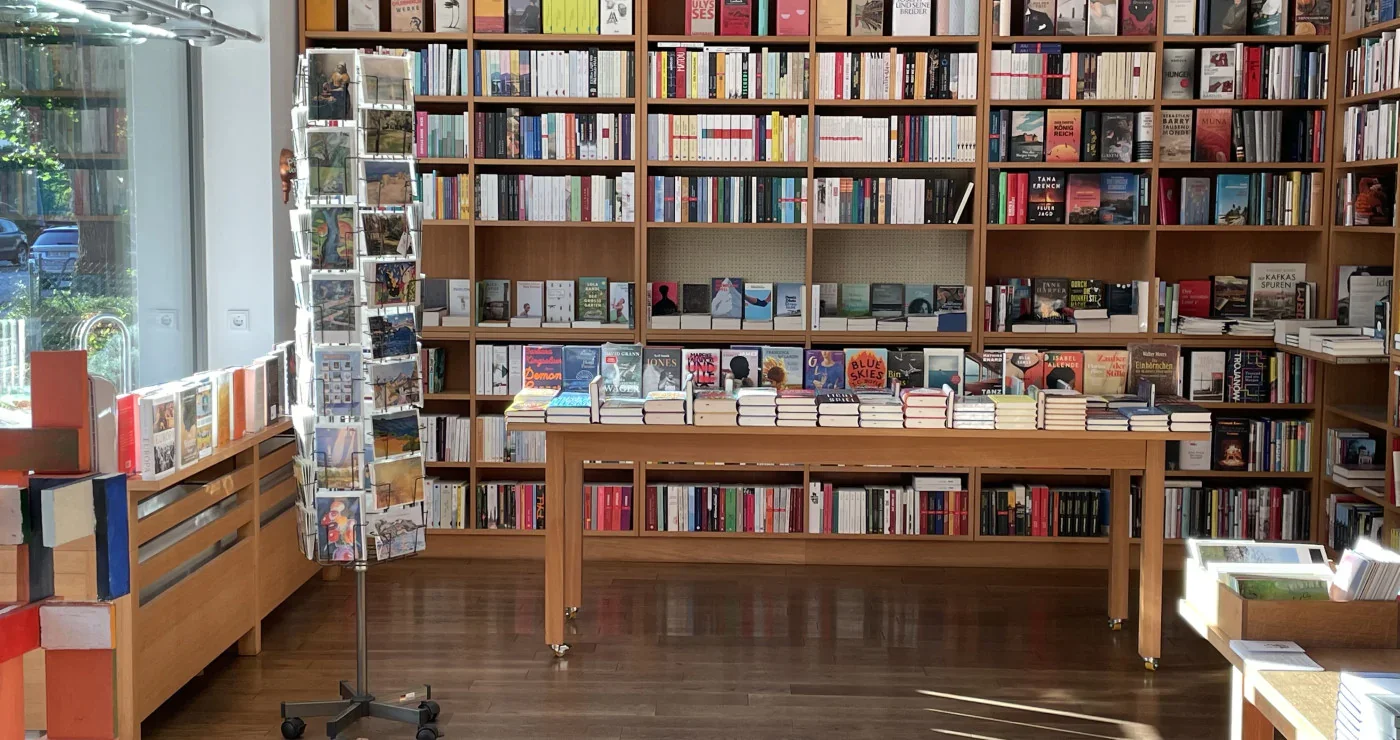
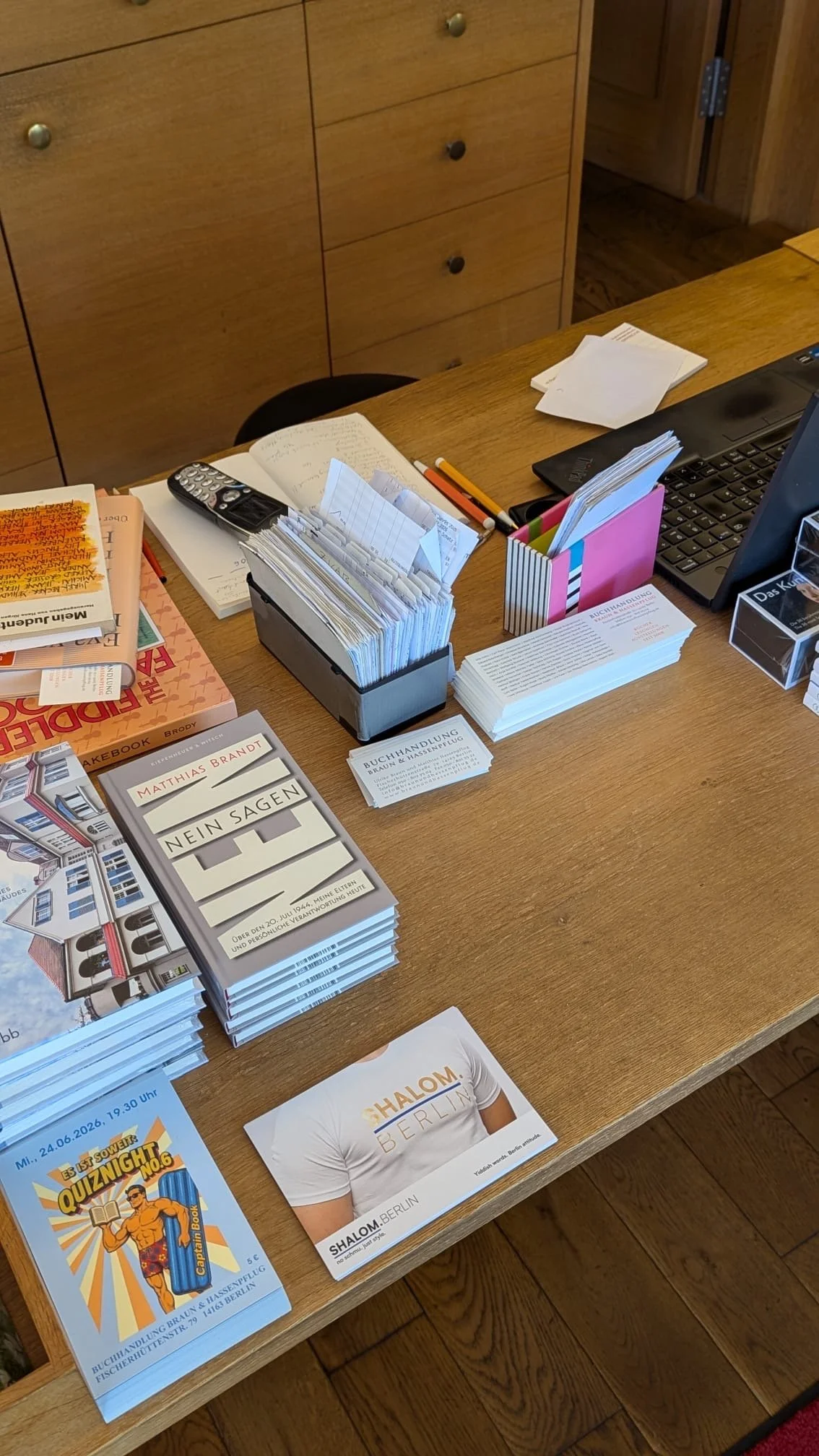
Dort gibt es sehr gute Bücher. Dort arbeiten kluge Menschen. Und deswegen liegen dort auch SHALOM.BERLIN-Flyer sowie eines unserer Shirts aus.
Das freut uns nicht nur, weil dadurch mehr Menschen von der Marke erfahren.
Sondern weil es sich richtig anfühlt.
Zwischen Büchern, Gedanken und Gesprächen ist SHALOM.BERLIN bestens aufgehoben.
Vielleicht passt das alles sogar besser zusammen, als es auf den ersten Blick scheint.
Denn wer liest, begegnet anderen Perspektiven.
Wer liest, erweitert seinen Wortschatz.
Wer liest, entdeckt Geschichten.
Und manchmal entdeckt man dabei sogar, dass jiddische Wörter wie SCHLAMASSEL oder CHUZPE Teil der deutschen Sprache sind.
Lesen bildet.
Vielen Dank an Ulrike und Matthias von Braun & Hassenpflug für die Unterstützung.
Und an alle Menschen mit brain and backbone, die SHALOM.BERLIN bisher begleitet haben.
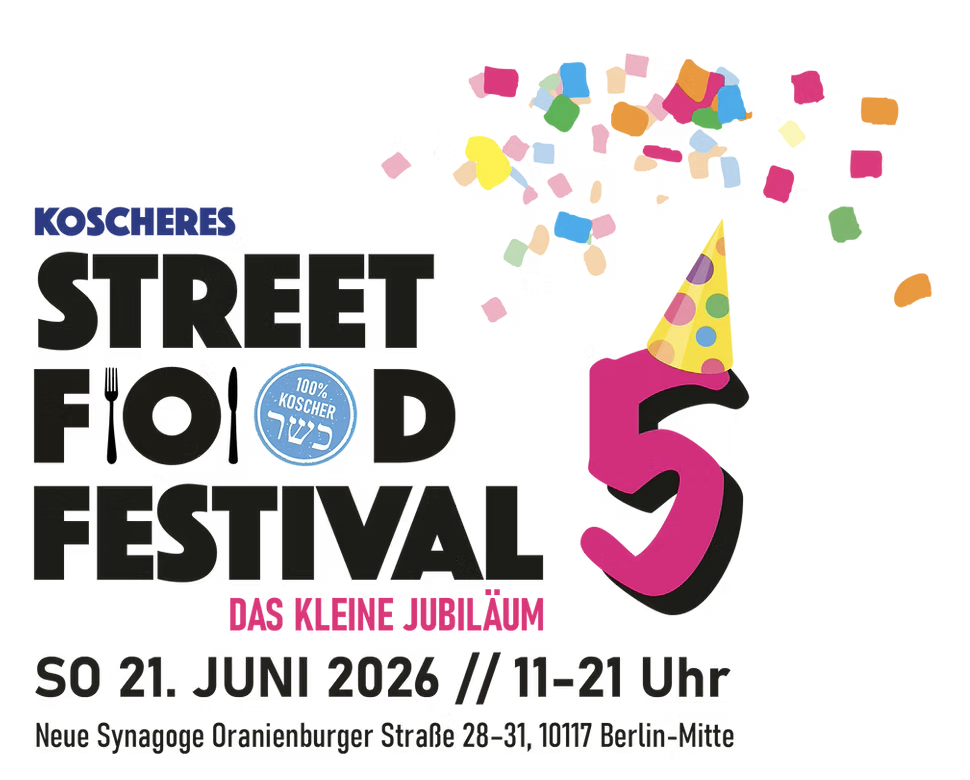
Koscheres Steetfood Festival
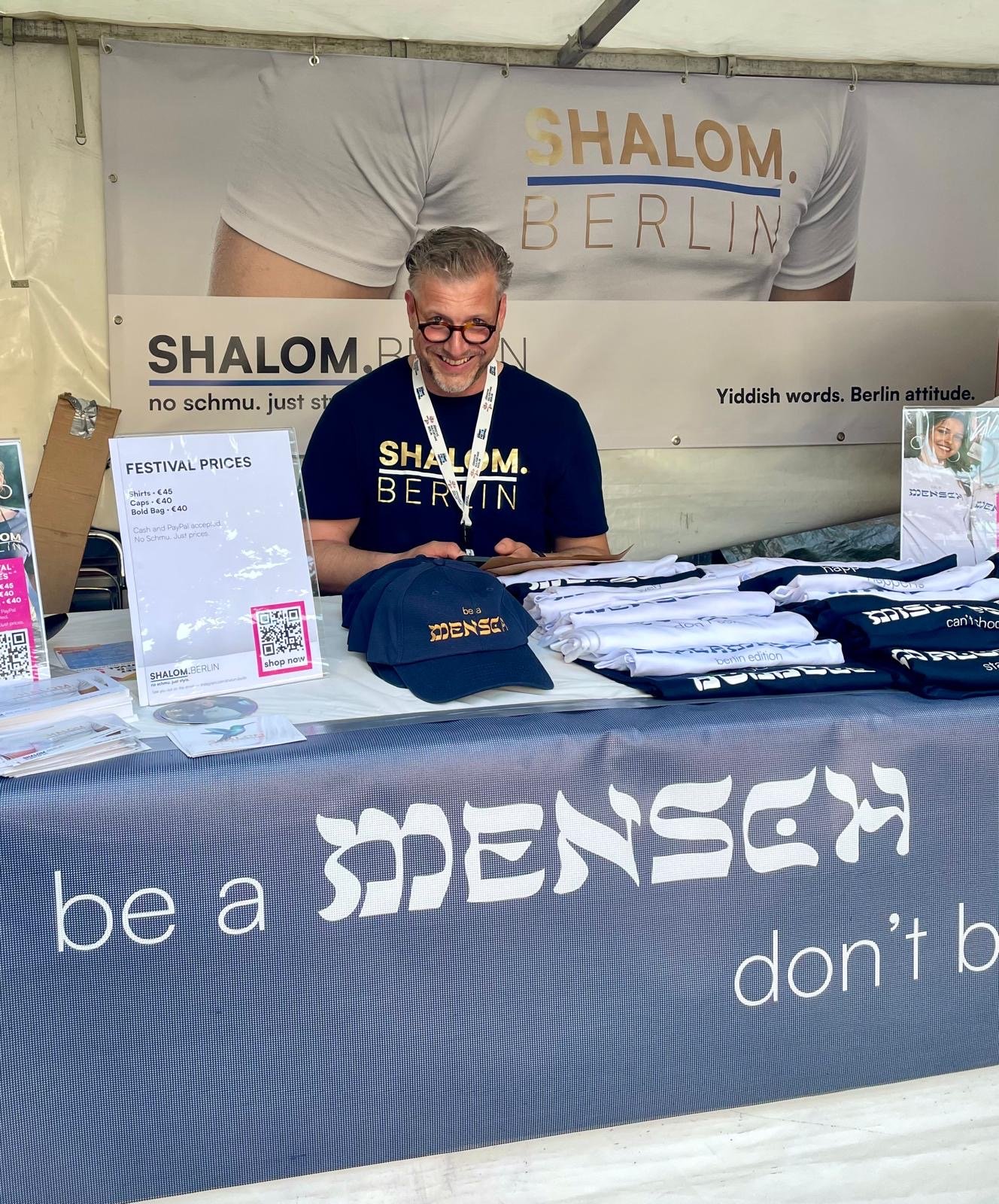
SHALOM.BERLIN had its very first pop-up at the Kosher Streetfood Festival in Berlin.
What we hoped for was a nice day, a few conversations and some interest in the shirts.
What we got was much more than that.
Throughout the day, people stopped by to say hello because they already knew SHALOM.BERLIN from Instagram. Others discovered the brand for the first time and stayed for conversations about Yiddish words, Berlin, language and culture.
For us, it was a powerful reminder that brand building is community building.
Without a marketing budget, SHALOM.BERLIN has grown entirely through people who shared posts, recommended shirts, started conversations and brought others along.
Meeting many of these people in person felt like a genuine proof of concept.
What started as an idea less than a year ago suddenly became something tangible: a community.
A huge thank you to the Jewish Community of Berlin for organising the festival and for giving us the opportunity to be part of it.
We'll definitely be back.
Until then:
don't be a SCHMOCK. be a MENSCH.